
Air Force Flag vs. Other Military Branch Flags: What Makes It Unique
Feb 5th 2026
Flags do more than flutter in the wind. They speak without words. They embody history, service, and pride. The flag of US Air Force isn’t just a piece of fabric, it’s a symbol of discipline, readiness, and global responsibility. While every military branch has its own emblematic flag, the Air Force’s colors, symbols, and history make it distinct.
Understanding what sets the Air Force flag apart gives veterans, service members, and patriotic supporters the knowledge they need to honor it correctly, whether for ceremonies, memorials, offices, or home displays.
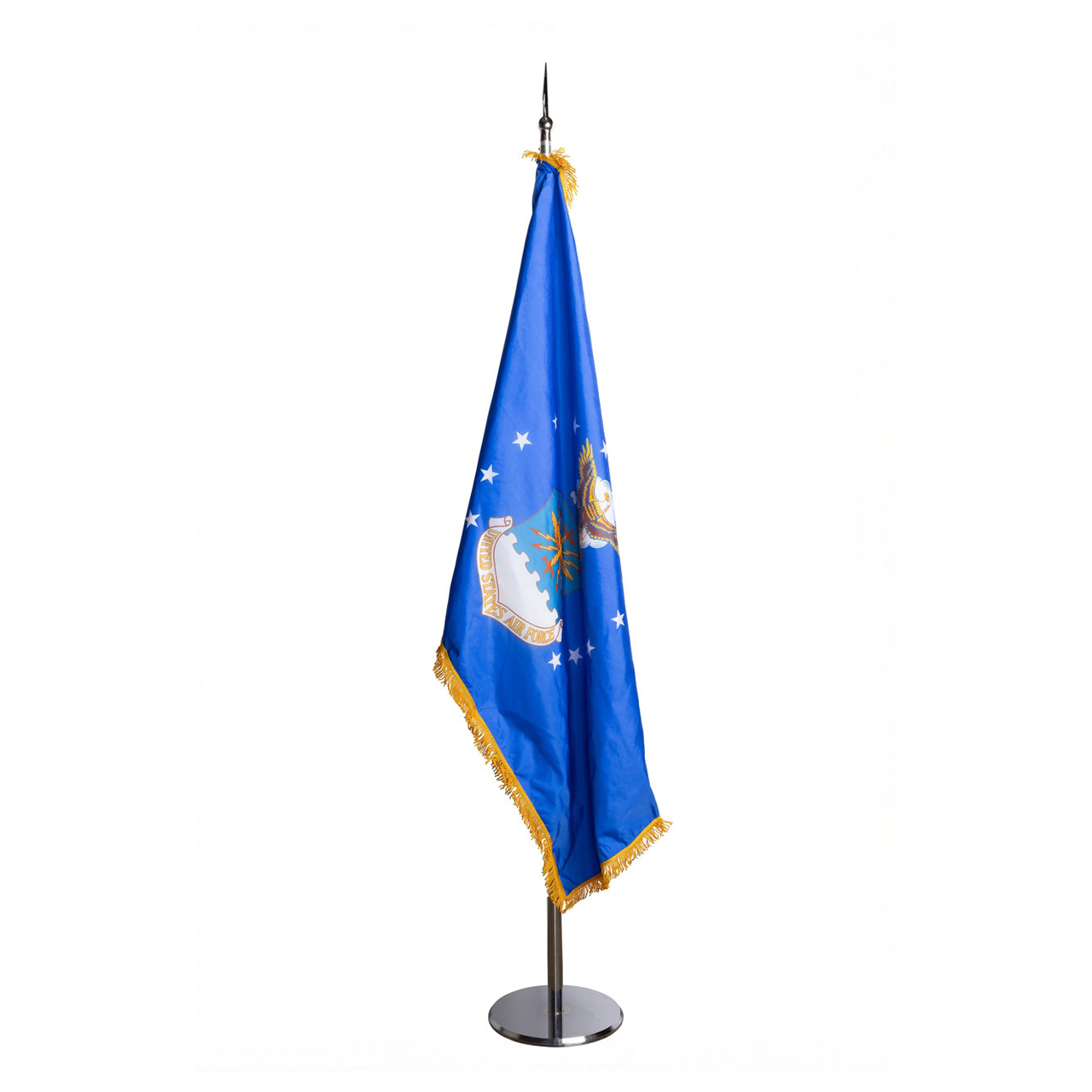 US Air Force Departmental Flag
The Birth of the Air Force Flag
The United States Air Force officially became an independent branch on September 18, 1947. Before that, air operations were part of the Army Air Corps. With independence came a need for a unique identity, and in 1951, the flag of US Air Force was introduced.
The Air Force color guard uses it in over 6,000 ceremonies annually, including funerals, parades, and official events.
Its purpose was clear: represent the Air Force alongside the Army, Navy, Marine Corps, and Coast Guard; honor its personnel; and symbolize the branch’s global mission. The flag was designed for formal display, ceremonies, and memorials, not casual decoration.
Symbols on the Air Force Flag
Every element on the flag of US Air Force carries meaning:
- The eagle represents strength, courage, and vigilance.
- The wings show air superiority and the ability to project power worldwide.
- The shield signifies defense of the nation.
- The globe reflects global reach and responsibility.
- Thirteen stars represent the original colonies and America’s foundational values.
This symbolism is why the Air Force ceremonial flag communicates authority instantly. Even without explanation, the message is clear: discipline, honor, and commitment.
Comparing the Air Force Flag to Other Branches
The U.S. military has multiple branch flags, but the flag of US Air Force stands out in several ways:
- Colors: While the Navy and Coast Guard flags favor darker blues and golds, the Air Force uses a vivid ultramarine blue paired with silver and white accents, representing the sky and integrity.
- Design: The Air Force flag combines a symbolic eagle, shield, and globe, whereas the Army focuses on crossed cannons and the Marine Corps on the eagle, globe, and anchor.
- Purpose: The Air Force flag is closely tied to global operations, reflecting the branch’s emphasis on air and space superiority.
Every branch flag tells a story, but the Air Force flag is uniquely linked to airpower and global mission readiness.
Color Meanings on the Air Force Flag
The colors on the flag of US Air Force are not decorative, they’re deliberate:
- Blue symbolizes vigilance, perseverance, and justice.
- Gold signifies excellence and achievement.
- White represents integrity, purity, and purpose.
This precise palette is why only official Air Force-approved flags are recommended for ceremonies, offices, or home displays. Using incorrect shades diminishes the flag’s impact and meaning.
Flag Protocol: Air Force vs. Other Branches
Protocol for the flag of US Air Force follows strict rules:
- Never let the flag touch the ground.
- Display with proper lighting if flown at night.
- Position correctly alongside the U.S. national flag and other branch flags.
Many people confuse the Air Force flag with the Air Force seal, but they are separate. The flag is for display; the seal is for documents and official branding. Using the seal in place of the flag violates tradition and can create misunderstandings.
Where to Display the Air Force Flag
The flag of US Air Force can be displayed in several settings:
- Command offices: Symbolizes authority and professionalism.
- Military bases: Represents mission readiness.
- Veterans halls: Honors past service members.
- Memorials and ceremonies: Shows respect during events like Veterans Day or Memorial Day.
Correct placement reinforces discipline, pride, and honor, whether for active duty, veterans, or ROTC programs.
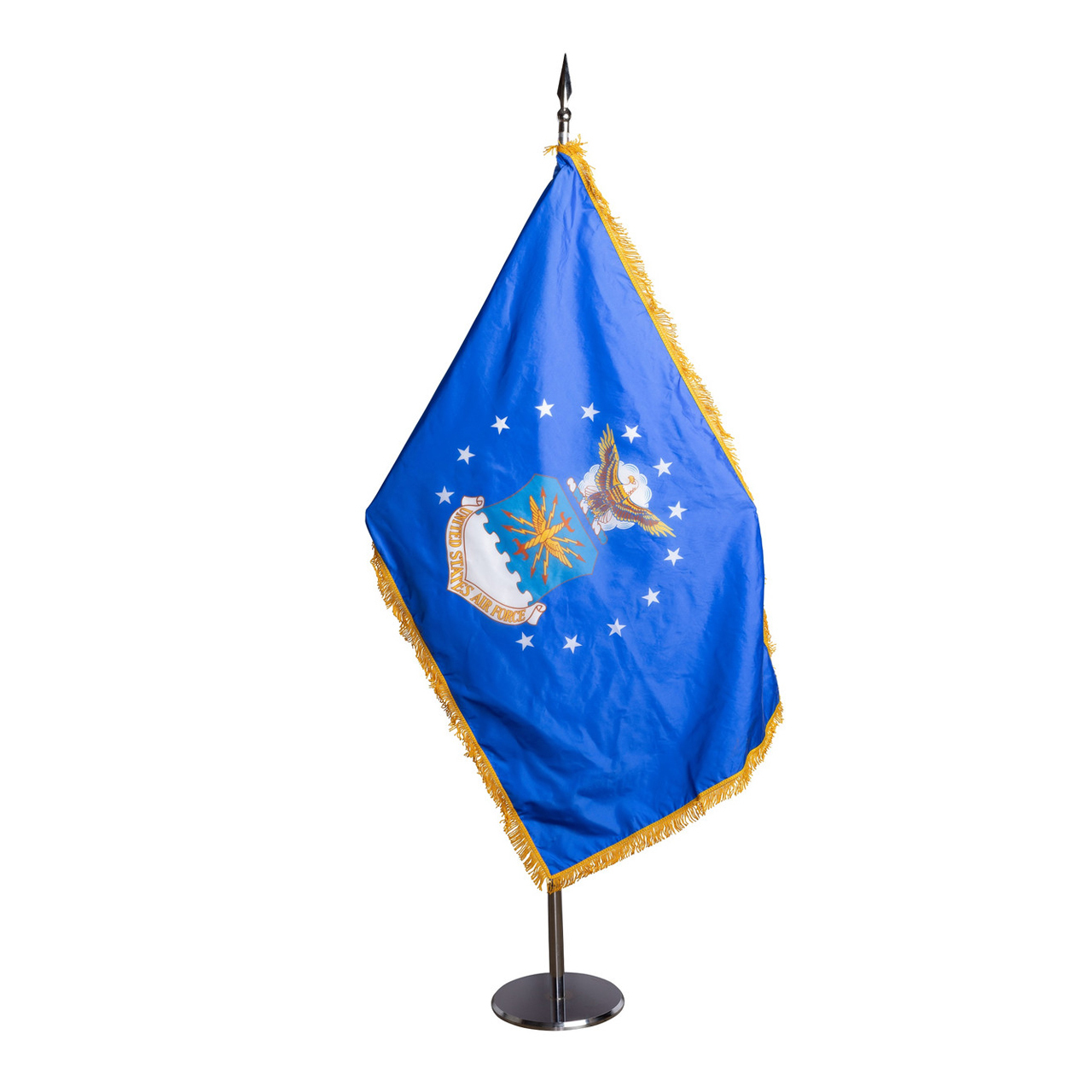 US Air Force Departmental Flag
Indoor vs. Outdoor Displays
Indoor displays often use tabletop or office-sized Air Force flags, while outdoor displays require durable poles and weather-resistant materials.
- Indoor flags: Often have gold fringe and stand in offices or conference rooms.
- Outdoor flags: UV-resistant and made for long-term exposure.
Placement and material choice ensure the flag remains dignified and lasts through years of ceremonies or daily displays.
Using Multiple Flags Together
When displaying the Air Force flag alongside other branch flags or the American flag:
- The U.S. national flag always takes precedence.
- Air Force flags should be placed according to branch order and protocol.
- Avoid overcrowding or mismatched sizes that dilute the display.
Proper positioning emphasizes respect, hierarchy, and ceremonial discipline.
Ceremonial Importance of the Air Force Flag
Ceremonial events are where the flag of the US Air Force shines.
- During promotion ceremonies, retirement events, or memorials, the flag represents service, sacrifice, and leadership.
- Mishandling the flag, such as letting it touch the ground, can undermine the solemnity of the occasion.
- Only official, government-specification flags maintain the correct colors, proportions, and symbolism.
Caring for the Flag
Proper care ensures the flag of US Air Force remains sharp and respected:
- Rotate it to prevent sun damage.
- Clean gently with cold water and mild soap if necessary.
- Inspect for tears or fading. Damaged flags must be replaced, not used.
Consistent care communicates attention to detail and reverence for the branch.
Why the Air Force Flag Matters More Than Decoration
While other flags may symbolize tradition, the flag of the US Air Force is a representation of modern readiness and global responsibility. It reminds personnel of their mission: to protect airspace, support ground forces, and uphold U.S. values worldwide.
Choosing the Right Air Force Flag
When purchasing a flag of US Air Force, consider:
- Official approval: Must meet government specifications.
- Correct size: Office, tabletop, or outdoor display.
- Durable materials: Resist fading and wear.
- Ceremonial-ready features: Proper hems, stitching, and display accessories.
A quality flag is more than decoration, it’s a commitment to honor, accuracy, and tradition.
Conclusion: Honor, Pride, and Precision
The flag of the US Air Force is unique among military branch flags. Its symbols, colors, and strict protocols reflect discipline, global readiness, and pride. Whether flown in offices, homes, or at memorials, the flag carries a message of service that demands respect.
For those who want official Air Force-approved flags, reliable displays, and ceremonial-ready gear, choosing the right flag matters. Let it stand tall, properly cared for, and let it tell the story of Air Force dedication every day.
To honor service with precision, explore our selection of official Air Force flags at Glendale Parade Store. Durable, government-specification, and ready for ceremonies, our flags ensure every display reflects the respect it deserves.
FAQs
What is the official flag of the US Air Force?
The official flag of the US Air Force was introduced in 1951 and represents the branch’s identity. It features an eagle, a shield, a globe, and thirteen stars on a blue field, symbolizing strength, global responsibility, and the nation’s original colonies.
Why are there 13 stars on the Air Force flag?
The thirteen stars on the Air Force flag represent the original thirteen American colonies, honoring the nation’s founding. They serve as a reminder of historical roots and the Air Force’s commitment to defending the country and upholding the principles upon which the United States was built.
What are the six military flags?
The six primary U.S. military flags represent the ly, Navy, Marine Corps, Air Force, Coast Guard, and Space Force. Each flag embodies the branch’s history, mission, and symbolism, distinguishing its unique identity while maintaining alignment with national values and ceremonial protocol.
Do you get a flag when you retire from the Air Force?
Yes, retiring Air Force personnel often receive a ceremonial Air Force flag during formal retirement ceremonies. The flag symbolizes honor, service, and dedication to duty, serving as a lasting tribute to a career spent defending national airspace and contributing to mission success.