
What Do USA Flag Colors Represent? A Complete Breakdown
Mar 19th 2026
The American flag has appeared in some of the most powerful moments in history. It has flown above battlefields, been raised after moments of national triumph, and even traveled to the moon. Yet while most people instantly recognize the stars and stripes, fewer understand the deeper meaning behind the USA flag colors.
The three colors, red, white, and blue, are more than just a design choice. They represent values that have defined the United States since its founding. Courage, integrity, perseverance, and justice are all symbolized within those familiar stripes and stars.
Many Americans grow up saluting the flag in school or seeing it displayed during national holidays, but the story behind the American flag colors often remains less widely known. The symbolism tied to each color developed alongside the nation itself and continues to inspire pride today.
In this guide, we will explore the history of the American flag, the official meaning behind its colors, the modern color codes used in design, and the historical story behind why red, white, and blue became the nation’s signature palette.
A Brief History of the American Flag
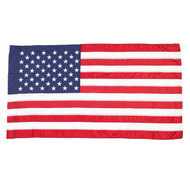
The story of the American flag began during the Revolutionary War. On June 14, 1777, the Continental Congress passed what became known as the Flag Resolution. It stated that the flag of the United States would feature thirteen alternating red and white stripes and thirteen white stars on a blue field representing a new constellation.
Interestingly, the resolution described the design but did not explain the symbolism of the colors. At the time, the focus was on unity among the original thirteen colonies rather than the deeper meaning of the color choices.
A few years later, symbolism began to emerge. In 1782, Charles Thomson, Secretary of the Continental Congress, described the meaning of the colors when presenting the Great Seal of the United States. His explanation eventually became widely associated with the flag as well.
According to Thomson:
- Red represents hardiness and valor
- White represents purity and innocence
- Blue represents vigilance, perseverance, and justice
Although these meanings were never formally written into law for the flag itself, they became the widely accepted interpretation of the American flag colors.
Over time, the flag evolved as the country grew. The original thirteen stars expanded as new states joined the Union. Today the flag contains fifty stars representing the fifty states and thirteen stripes representing the original colonies.
The current version of the flag became official on July 4, 1960, after Hawaii became the fiftieth state. Remarkably, this design has now been used longer than any previous version.
The American flag has also earned several beloved nicknames over the years, including “Old Glory,” “Stars and Stripes,” and “The Star-Spangled Banner.”
 America's 250th Anniversary Flag - Betsy Ross Edition 3x5
Studies in visual recognition show that well-designed flags with strong color contrast are up to 80% more likely to be easily recognized at a distance, which is why high-quality materials and accurate color standards are essential when producing professional military and ceremonial flags.
What Do the American Flag Colors Mean?
The heart of the discussion around usa flag colors centers on what each color represents. Though simple in appearance, each color carries a strong symbolic meaning tied to American values and history.
Red: Hardiness and Valor
Red is one of the most striking elements of the American flag. It symbolizes courage, strength, and sacrifice.
Charles Thomson first associated red with “hardiness and valor” in his description of the Great Seal. Over time, many Americans also came to view red as a symbol of the sacrifices made by those who defended the nation’s freedom.
Red had also been a prominent color in early colonial banners and in the Grand Union Flag, which was used before the official American flag was adopted.
In 1986, President Ronald Reagan offered a memorable description of the flag’s symbolism. He said that red represents “courage and readiness to sacrifice.”
Today, the red stripes remind Americans of the bravery and determination that helped shape the nation.
White: Purity and Innocence
White represents purity, honesty, and the moral ideals that guided the founding of the United States.
Charles Thomson described white as symbolizing “purity and innocence,” referring to the vision of a nation built on honorable principles and fair governance.
White appears in the flag’s stripes and in the stars that represent each state. These stars shine against the blue background as symbols of unity and aspiration.
President Reagan later described white as representing “pure intentions and high ideals.” It reflects the hope that the nation will always strive toward fairness, integrity, and justice.
Blue: Vigilance, Perseverance, and Justice
The blue field of the flag, often called the canton, holds the fifty white stars representing the states.
Blue symbolizes vigilance, perseverance, and justice. It represents the determination required to maintain freedom and protect democratic values.
The official shade is often referred to as “Old Glory Blue.” Historically, this color was produced using indigo dye derived from plants, giving early flags their deep blue appearance.
Reagan described blue as representing “vigilance and justice,” highlighting the ongoing responsibility citizens share in protecting the nation’s ideals.
While the symbolism behind the USA flag colors comes from historical interpretation rather than law, these meanings have become widely accepted across American culture.
|
Color |
Official Name |
Symbolism |
Reagan's Words (1986) |
|
Red |
Old Glory Red |
Hardiness & Valor |
Courage and readiness to sacrifice |
|
White |
White |
Purity & Innocence |
Pure intentions and high ideals |
|
Blue |
Old Glory Blue |
Vigilance, Perseverance & Justice |
Vigilance and justice |
Official USA Flag Color Codes (For Designers and Creators)
For artists, designers, educators, and manufacturers, accurately reproducing the American flag requires specific color standards.
The official colors were originally defined using the Standard Color Reference of America, a textile-based color guide created by the Color Association of the United States.
Because modern design often happens digitally, government sources have also published approximate equivalents in digital color formats such as Pantone, RGB, and CMYK.
 US Flags: Outdoor Display, Tough-Tex®
Exact digital reproduction can vary slightly, but the following values are widely accepted as standard references.
Color Code Reference Table:
|
Color |
Pantone |
Hex (Web) |
RGB |
CMYK |
|
Old Glory Red |
PMS 193C |
#B31942 |
179, 25, 66 |
0, 100, 66, 13 |
|
White |
, |
#FFFFFF |
255, 255, 255 |
0, 0, 0, 0 |
|
Old Glory Blue |
PMS 282C |
#002868 |
0, 40, 104 |
100, 62, 0, 59 |
These color codes are used by manufacturers producing flags, designers creating educational materials, and organizations printing patriotic graphics.
For anyone designing flag-themed materials or commemorative products, referencing the official standards helps maintain historical accuracy.
Many flag suppliers also use these color standards when producing high-quality American flags and patriotic displays.
Why These Colors? The Story Behind the Choice
One of the most interesting aspects of the American flag colors is that they were not originally chosen for symbolic reasons.
When the Continental Congress approved the flag in 1777, the resolution focused entirely on the design: thirteen stripes and thirteen stars. It did not explain why red, white, and blue were selected.
Historians believe the color choice was influenced by earlier colonial flags and by the British Union Jack, which used the same three colors.
Before the official American flag, the Grand Union Flag was used between 1775 and 1777. It featured thirteen red and white stripes with the British Union Jack in the upper corner.
As the United States separated from British rule, the design evolved into the stars and stripes we recognize today, but the color scheme remained.
 US Flags: Indoor & Parade Use, Nylon
Over time, Americans embraced the symbolism tied to the colors. Courage, purity, and justice became ideals closely associated with the nation’s identity.
The flag’s design also contains additional symbolic elements:
- The fifty stars represent the fifty states.
- The thirteen stripes represent the original thirteen colonies.
According to a 1977 publication by the U.S. House of Representatives, the star itself represents “the heavens and the divine goal to which man has aspired.”
Another remarkable fact is that the current 50-star flag has remained unchanged since 1960. That makes it the longest-used version of the American flag in the nation’s history.
Today, the stars and stripes are recognized around the world as a symbol of American values and history.
For those interested in learning more about the history of the flag, official information is available through the U.S. government and educational institutions such as the Smithsonian.
The Enduring Meaning of the USA Flag Colors
The USA flag colors, red, white, and blue, have become some of the most recognizable symbols in the world. Though the meanings attached to them developed after the flag’s creation, they now represent the ideals that have shaped the nation for more than two centuries.
Red reminds us of courage and sacrifice.
White represents integrity and noble ideals.
Blue stands for perseverance, justice, and vigilance.
Together, these colors form a design that reflects both the nation’s history and its aspirations for the future.
Whether flying outside a home, displayed at a national monument, or carried during celebrations like Independence Day, the American flag continues to represent unity and shared values.
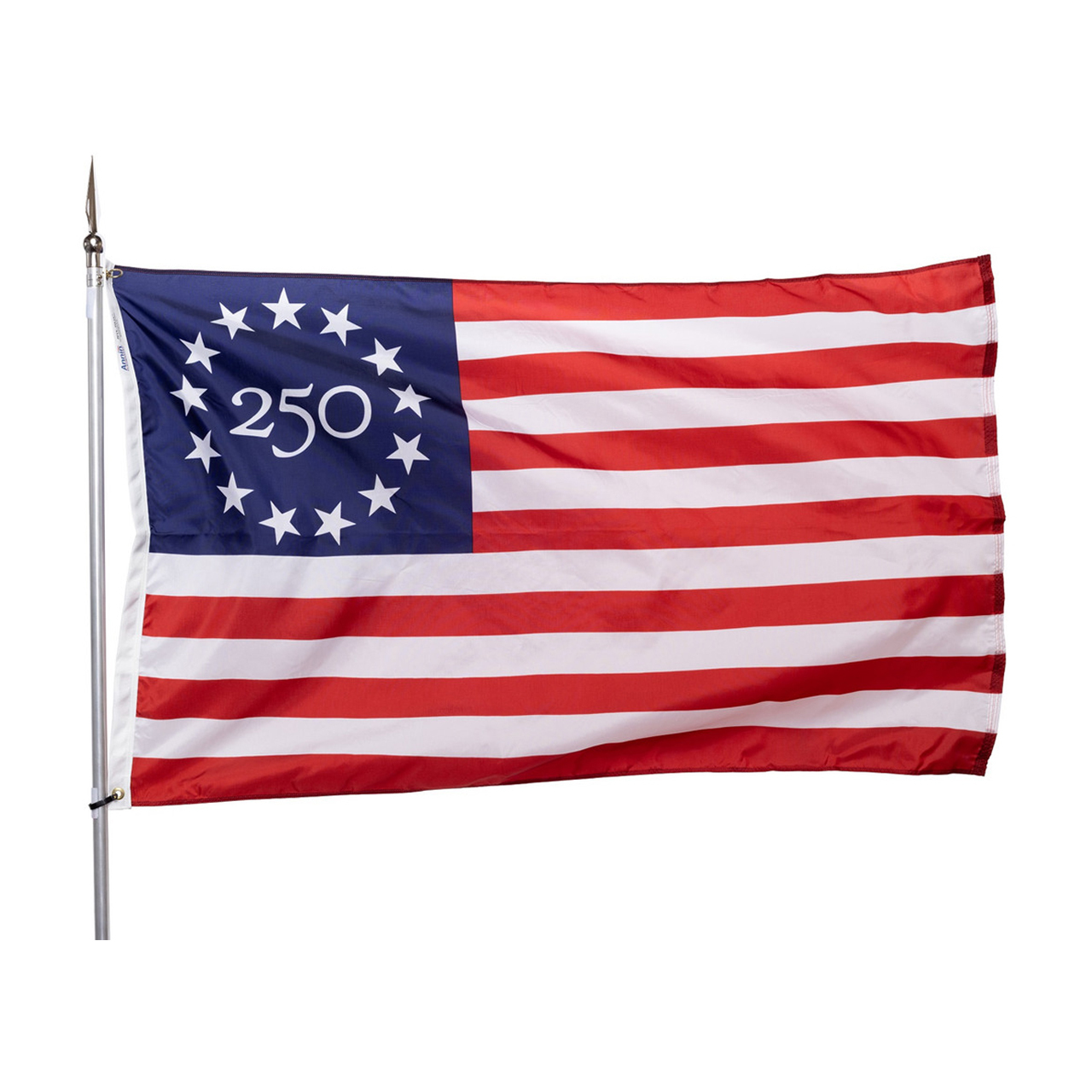
As the United States approaches historic milestones such as its 250th anniversary, many Americans are reflecting on the legacy represented by the stars and stripes. Commemorative flags and patriotic displays have become meaningful ways to celebrate the country’s history and look toward the future.
For those interested in exploring commemorative designs honoring the nation’s upcoming milestone, you can learn more about America’s 250th anniversary flags here at Glendale Parade Store.
More than two centuries after its creation, the American flag remains a powerful reminder of the ideals that unite the nation. And at the heart of that symbol are the enduring meanings behind the red, white, and blue.
FAQs
What are the official colors of the American flag?
The official colors of the American flag are red, white, and blue. According to the U.S. government color standards, the shades are Old Glory Red, Old Glory Blue, and white. These colors represent valor, purity, and justice, forming one of the most recognizable national flag designs in the world.
What color is USA blue?
The blue used in the U.S. flag is officially called Old Glory Blue. It is a deep navy shade used in the canton where the 50 stars appear. This color represents vigilance, perseverance, and justice, and it remains consistent across official government flag production standards.
What do flag colors symbolize?
Flag colors usually represent national ideals and historical values. Red often symbolizes bravery or sacrifice, white stands for peace or purity, and blue represents justice or vigilance. Many nations use color symbolism to communicate identity, unity, heritage, and the principles their country was founded upon.