
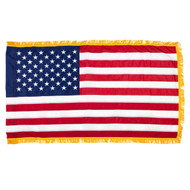
American Flag Etiquette - Do’s and Don’ts Every Citizen Should Know
Mar 23rd 2026
Every year, millions of Americans proudly display the American flag outside their homes, businesses, schools, and government buildings. You’ll see it waving on the Fourth of July, Memorial Day, Veterans Day, and countless other patriotic moments. But here’s the reality, many people who proudly fly the flag unknowingly break the basic rules of American flag etiquette.
Most citizens have never actually read the official guidelines in the U.S. Flag Code. As a result, common mistakes happen all the time, flags hung upside down, touching the ground, or flown incorrectly at half-staff.
That may seem minor, but the flag represents something far bigger than fabric and color. It symbolizes the sacrifices of military members, the courage of first responders, and the ideals of freedom and unity that define the United States.etiq
Understanding American flag etiquette ensures that when you display the flag, you do it the right way. This guide explains everything you need to know, from how to display the flag properly to what actions should always be avoided.
What Is American Flag Etiquette?
American flag etiquette refers to the traditional rules and customs that govern how the American flag should be displayed, handled, and respected.
These guidelines are formally outlined in the U.S. Flag Code, which is part of federal law under Title 4, United States Code, Chapter 1. Congress first established the code in 1942 to create a consistent national standard for how citizens, businesses, and government institutions should treat the flag.
The Flag Code is important to understand, but one key point is often misunderstood: for civilians, it is largely advisory rather than enforceable law. In other words, violating the Flag Code typically does not carry legal penalties. Instead, it serves as a framework of respect and patriotic tradition.
The rules apply to:
- Private citizens
- Businesses and organizations
- Schools and civic institutions
- Government buildings
The goal is simple, ensure the flag is always treated with dignity and honor.
How to Display the American Flag: Key Rules & Guidelines
Displaying the American flag properly is the most important part of understanding American flag etiquette. These guidelines ensure the flag is shown in a respectful and dignified way.
 US Flags: Outdoor Display, Cotton
When to Fly the American Flag
The flag can be displayed every day, but there are traditional guidelines for when it should be flown.
- Display the flag from sunrise to sunset on buildings and outdoor flagpoles.
- It may be displayed 24 hours a day if properly illuminated at night.
- Always hoist the flag briskly and lower it ceremoniously.
- Display it especially on patriotic holidays.
Important holidays for flying the flag include:
- Independence Day (July 4)
- Memorial Day (May 25)
- Flag Day (June 14)
- Veterans Day (Nov 11)
- Patriot Day (September 11)
Many Americans also fly the flag daily as a symbol of national pride.
Position and Direction of Display
Proper positioning of the American flag is one of the most misunderstood areas of American flag etiquette.
When displayed on a wall vertically: The union (blue field of stars) must be at the top left from the viewer’s perspective.
When displayed horizontally: The union should remain in the upper left corner.
When displayed in a window: The union should face the street, appearing on the observer’s left side.
When multiple flags are displayed:
- The American flag must always be higher than other flags on the same pole.
- It should be raised first and lowered last.
When displayed with flags of other nations: Each flag should be on separate poles of equal height.
Flying the Flag at Half-Staff
Flying the flag at half-staff is a sign of national mourning and respect.
Half-staff means positioning the flag halfway between the top and bottom of the flagpole.
The correct procedure is:
- Raise the flag briskly to the top of the pole.
- Lower it slowly to the half-staff position.
- Before lowering it for the day, raise it back to the top briefly.
Only certain officials can officially order the flag flown at half-staff:
- The President of the United States
- State Governors
- The Mayor of Washington D.C.
One important exception is Memorial Day.
On Memorial Day:
- Fly the flag at half-staff from sunrise until noon
- Raise it to full-staff at noon until sunset
 US Flags: Indoor & Parade Use, Nylon
What You Must Never Do: American Flag Don’ts
Understanding what not to do is just as important as knowing how to display the flag properly.
According to the Flag Code, the following actions should always be avoided.
- Never allow the flag to touch the ground, floor, or water.
- Never display the flag upside down, except as a signal of extreme distress.
- Never carry the flag flat or horizontally during display.
- Never use the flag as clothing, bedding, or drapery.
- Never print the flag on disposable items like napkins or packaging.
- Never write or mark anything on the flag.
- Never use the flag as a tablecloth or ceiling covering.
- Never dip the American flag to any person or object.
These traditions exist to maintain the symbolic dignity of the flag.
Conduct During Flag Ceremonies
American flag etiquette also applies to how people behave during ceremonies that involve the flag.
The Pledge of Allegiance
During the Pledge:
- Stand at attention
- Face the flag
- Place the right hand over the heart
Men should remove non-religious headwear and hold it at the left shoulder.
Military personnel in uniform render a formal military salute.
Veterans not in uniform are permitted to salute as well.
The National Anthem
During the National Anthem:
- Stand at attention
- Face the flag if it is present
- Place the right hand over the heart
This respectful posture should be maintained from the first note until the final note.
A 2023 national poll found that nearly 70% of Americans consider standing during the national anthem an important expression of respect for the flag and country.
Why American Flag Etiquette Still Matters
Some people assume these traditions are outdated, but that view overlooks the deeper meaning behind them.
The American flag is not simply a decoration. It represents:
- National unity
- Military sacrifice
- Democratic values
- The country’s history and identity
Following proper American flag etiquette is a simple way for citizens to show respect for those ideals.
Flag retailers report spikes of 300% or more in American flag purchases around Independence Day and Memorial Day, showing how strongly the symbol still resonates with Americans.
Conclusion
Understanding American flag etiquette ensures that when you display the flag, you do so with the dignity and respect it deserves.
The most important guidelines are straightforward:
- Display the flag properly with the union in the correct position
- Follow proper timing when flying the flag
- Use half-staff correctly when ordered
- Avoid disrespectful uses of the flag
- Show respect during ceremonies like the Pledge of Allegiance and the National Anthem
While the U.S. Flag Code is not criminally enforced for civilians, following it reflects national pride and cultural respect.
The American flag represents more than a country, it represents the history, sacrifice, and ideals that built it.
FAQs
What is proper American flag etiquette when displayed at home?
Display the American flag from sunrise to sunset unless it is properly illuminated at night. Hang it with the union (blue field of stars) at the top-left from the viewer’s perspective. Never allow it to touch the ground and always position it higher than other flags on the same pole.
What does it mean when the American flag is flown upside down?
Flying the American flag upside down is recognized under the Flag Code as a signal of dire distress, meaning extreme danger to life or property. Outside of those circumstances, displaying the flag upside down is considered improper and disrespectful.
When should the American flag be flown at half-staff?
The flag is flown at half-staff only when ordered by the President, a state governor, or the Mayor of Washington D.C. It is also traditionally flown at half-staff until noon on Memorial Day before being raised to full-staff for the remainder of the day.
What should I do if my American flag touches the ground?
If the flag touches the ground accidentally, it does not need to be destroyed. Simply pick it up and inspect it. If it remains clean and undamaged, it can continue to be used. Only worn or damaged flags should be formally retired.
How do you properly retire an American flag?
The preferred way to retire an American flag is through a dignified burning ceremony. Many American Legion posts, Veterans organizations, and Boy Scout troops perform official retirement ceremonies, particularly around Flag Day on June 14. Synthetic flags may also be buried respectfully if burning is not appropriate.