

Army Shoulder Cord Regulations - What Most People Don’t Know
Mar 5th 2026
When it comes to military uniforms, nothing is random. Every badge, stripe, ribbon, and cord carries meaning. Army shoulder cords are no exception. They are not fashion accessories. They represent qualification, branch identity, or ceremonial designation.
Understanding army shoulder cords regulation is important for active-duty soldiers, National Guard members, ROTC cadets, and even collectors. Wearing the wrong cord, placing it incorrectly, or purchasing unauthorized versions can lead to uniform violations.
This guide explains what most people overlook about Army shoulder cords, including who can wear them, how they are worn, and where to obtain authorized versions.
What Are Army Shoulder Cords?
Army shoulder cords are braided cords worn on dress uniforms to signify specific qualifications, branch identity, or unit distinctions. They are most commonly seen on the Army Service Uniform (ASU) and certain ceremonial uniforms.
They are often confused with aiguillettes, but in the Army, shoulder cords generally represent branch or unit identity rather than staff or aide-de-camp roles.
According to Army compliance reporting summaries, uniform and appearance standards under AR 670-1 account for over 60% of correctable discrepancies noted during formal inspections across active-duty units.
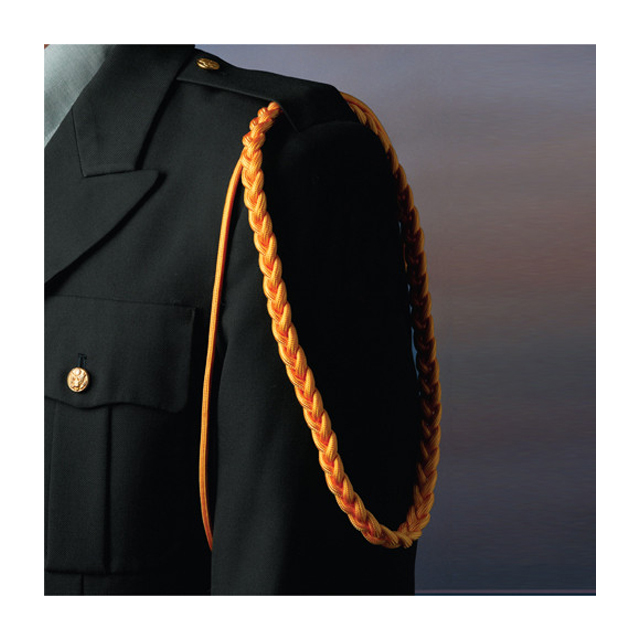 Single Underarm Loop Cords: One Color
Army Shoulder Cords Regulation Overview
The official rules governing wear are outlined in Army uniform regulations, particularly AR 670-1 and related Department of the Army pamphlets. These regulations specify:
- Who is authorized to wear specific cords
- On which uniform they may be worn
- Proper placement
- When wear is mandatory or optional
Failure to follow regulation is not minor. Uniform standards are part of discipline and professionalism.
The Army does not permit decorative or unofficial cords. If it is not authorized, it does not belong on the uniform.
The Army Blue Cord
The most recognized cord in the U.S. Army is the army blue cord.
The blue infantry cord is awarded to soldiers who complete Infantry One Station Unit Training and are awarded an infantry Military Occupational Specialty (MOS). It represents service in the infantry branch.
It is worn on the left shoulder of the Army Service Uniform.
The blue cord is not simply issued because someone is assigned to an infantry unit. It is earned through qualification. That distinction matters.
 Epaulet Cord: Hook-and-Eye Closure, One Color
Many assume the blue cord is decorative because of its visibility. It is not. It reflects branch identity and professional qualification.
Army ASU Cords
When discussing army asu cords, it is important to distinguish between:
- Infantry blue cord
- Fourragères (unit citation cords)
- ROTC or special program cords
- Band or ceremonial cords (when authorized)
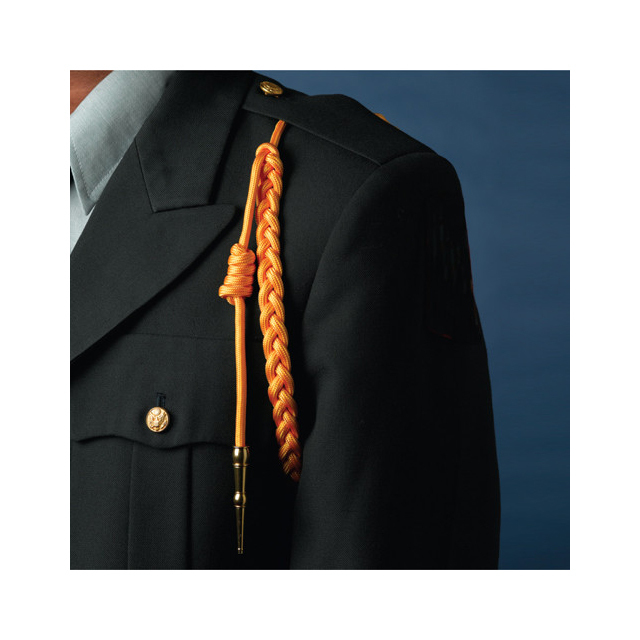 Single Strand Citation Cords: One Color
The Army Service Uniform has specific guidelines for cord wear. In most cases, only one shoulder cord is worn at a time unless otherwise authorized.
Placement rules generally require:
- Worn on the left shoulder
- Positioned under the shoulder loop
- Hanging naturally and evenly
- Not interfering with rank or insignia
Wearing multiple cords without authorization is incorrect. Uniform simplicity is intentional.
Who Is Authorized to Wear Army Shoulder Cords?
Authorization depends on qualification and assignment.
Examples include:
- Infantry soldiers – authorized the blue cord
- Soldiers assigned to units awarded a fourragère – authorized that unit cord
- ROTC cadets – may wear specific cords during training events
- Ceremonial units – may have additional authorized cords
Cords are not transferable decorations. If a soldier leaves the infantry branch and changes MOS, the blue cord is no longer worn unless regulations specify otherwise.
Authorization is tied to status and qualification, not preference.
Common Misunderstandings About Army Shoulder Cords
There are several common misconceptions:
First, many believe cords are optional decorations. They are not. If authorized, they are part of the uniform standard.
Second, some think cords can be worn interchangeably between branches. That is incorrect. A blue cord is specific to infantry.
Third, people often assume cords may be worn on either shoulder. In most cases, Army regulation specifies the left shoulder.
Fourth, soldiers sometimes believe older or commemorative cords are acceptable. Unless authorized in regulation, they are not.
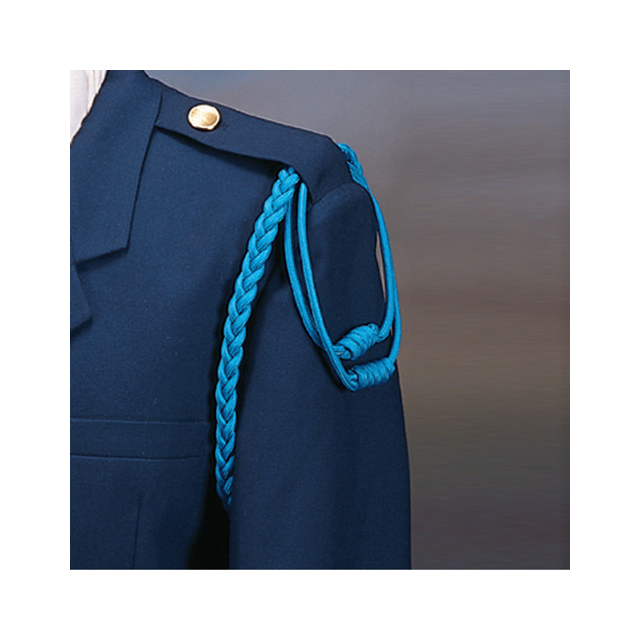 Double Knot Loop Cords: One Color
Uniform discipline matters.
Proper Placement According to Regulation
Correct placement is simple but strict.
The shoulder cord is:
- Attached under the shoulder loop
- Secured so it drapes naturally
- Positioned so the braided portion rests cleanly
- Worn on the left shoulder (for infantry blue cord)
It should not twist excessively, bunch up, or sit unevenly.
Uniform inspections frequently include checking proper cord placement.
Differences Between Cords and Fourragères
A shoulder cord like the infantry blue cord represents branch qualification.
A fourragère represents a unit citation awarded for collective action in combat.
The difference is important.
The infantry cord is individual qualification-based.
A fourragère is unit-based and tied to historical recognition.
Confusing the two leads to incorrect wear.
Are Shoulder Cords Mandatory?
If a soldier is authorized to wear a specific cord as part of the Army Service Uniform, then it becomes part of the required uniform configuration.
However, cords are not worn on all uniform types. They are typically limited to:
- Army Service Uniform (ASU)
- Dress uniforms
- Ceremonial uniforms
They are not worn on combat uniforms.
Knowing when to wear the cord is as important as knowing how.
Where Can I Find Authorized Army Shoulder Cords for Purchase Online?
This is one of the most common questions.
When searching for authorized cords, ensure the vendor:
- Clearly states regulation compliance
- Uses correct shade and braid design
- Matches official specifications
- Supplies military-grade construction
Avoid novelty retailers or costume suppliers. Regulation cords have specific color tones and braid thickness.
Military exchange stores and established military uniform suppliers are typically reliable sources.
Purchasing unauthorized versions may result in incorrect appearance during inspection.
If in doubt, verify with your unit supply sergeant or consult official regulation images before purchasing.
Quality Matters More Than Most Realize
Low-quality cords can:
- Fade quickly
- Fray at the ends
- Lose shape
- Appear incorrect in shade
The Army blue cord, for example, must match the official infantry blue tone. Slight color differences are noticeable.
Durability also matters. Cords should maintain structure during wear and storage.
Investing in proper quality ensures compliance and professionalism.
The Role of Tradition
Army shoulder cords are rooted in history. The infantry blue cord, in particular, represents branch pride and long-standing identity.
Uniform distinctions are part of Army heritage. They connect modern soldiers with generations before them.
That is why regulation matters. It protects the meaning behind the symbol.
Wearing a cord correctly shows respect for that tradition.
ROTC and Training Cords
ROTC programs sometimes authorize specific cords for training or ceremonial purposes.
These are governed by program-specific regulations and are not interchangeable with active-duty cords.
Cadets must follow their command guidance carefully.
Assumptions often lead to uniform mistakes.
Inspection Considerations
During inspections, leaders look for:
- Proper shoulder placement
- Correct cord type
- Clean condition
- No unauthorized additions
Uniform discrepancies, even small ones, can affect evaluation.
Attention to detail reflects discipline.
Transitioning Between Branches or Assignments
If a soldier reclassifies from infantry to another MOS, wear of the blue cord typically ends unless regulation authorizes continued wear.
Similarly, unit citation cords depend on assignment status.
Cords are not lifetime accessories unless regulation states so.
Always confirm with updated policy guidance.
Storage and Care
To maintain regulation appearance:
- Store cords flat
- Avoid crushing under heavy items
- Keep away from moisture
- Inspect before wear
A twisted or damaged cord reflects poorly during formal events.
 Shoulder Cords with Pins: Two Colors
Maintenance is part of uniform readiness.
Why Regulation Is Strict
Some may question why something as small as a cord is regulated so closely.
Uniform standards exist to:
- Promote unity
- Prevent unauthorized distinctions
- Preserve meaning
- Maintain professional appearance
When everyone follows the same standard, no individual elevates themselves beyond earned recognition.
Consistency protects credibility.
Final Thoughts
Understanding army shoulder cords regulation requires more than knowing what looks correct. It involves knowing authorization, placement, qualification requirements, and sourcing standards.
The army blue cord is earned through infantry qualification and worn with pride.
Army ASU cords must follow strict placement and authorization rules.
And if you are asking, Where can I find authorized army shoulder cords for purchase online, the answer is simple: purchase only from reputable military uniform suppliers who meet regulation specifications like Glendale Parade Store.
Shoulder cords are small in size but significant in meaning. Wearing them correctly honors the branch, the unit, and the uniform itself.
Precision matters. Tradition matters. And in the Army, regulation always matters.
FAQs
What do the colors of the military shoulder cords mean?
Military shoulder cord colors represent branch identity, qualification, or unit recognition. For example, infantry soldiers wear blue cords, while other colors may reflect artillery, ceremonial roles, or unit citations. Meanings vary by branch and regulation, so official guidance determines what each color specifically represents.
What is the 670-1 regulation?
AR 670-1 governs wear and appearance of Army uniforms and insignia. It specifies grooming standards, authorized badges, awards, and uniform configurations. This regulation ensures consistency, professionalism, and uniformity across the force, detailing exactly how each uniform item must be worn.