
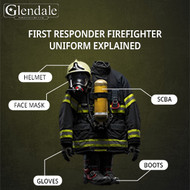
First Responder Firefighter Uniform Explained (Complete Guide)
May 11th 2026
Every year, thousands of U.S. firefighters enter burning buildings where temperatures can exceed 1,000 degrees Fahrenheit. Most walk out alive. The gear they wear is a large part of the reason why.
But firefighter uniforms are widely misunderstood. Many people picture a coat and helmet. The reality is a precisely engineered, multi-layer protection system where a single compromised component can mean the difference between a firefighter going home or not.
If you work in fire service, manage a department, or simply want to understand what stands between a firefighter and a life-threatening environment, this guide covers every component, the standards that govern them, and what departments need to know about cost, maintenance, and compliance.
What Is a Firefighter Uniform?
A firefighter uniform is specialized protective clothing designed to shield against heat, flames, chemicals, and hazardous environments. It includes turnout gear, a helmet, gloves, boots, and breathing apparatus, all engineered to meet strict U.S. safety standards.
It is not a single garment. It is a layered system where every component works together. Remove or compromise one layer, and the entire system is weakened.
Why the Right Gear Is Non-Negotiable
Structural fires can exceed 1,000 degrees Fahrenheit. Modern building materials release hydrogen cyanide and carbon monoxide when burning. According to the U.S. Fire Administration, smoke inhalation is the leading cause of fire fatalities, posing the same danger to firefighters operating without proper respiratory protection.
Beyond heat and smoke, visibility matters too. Retro-reflective trim helps incident commanders track personnel inside smoke-filled structures. This same principle of clear visual identification carries over to ceremonial contexts, where firefighter flags and fire department flags serve as visible symbols of department identity and pride.
Key Components of a Firefighter Uniform
Turnout Gear (Bunker Gear)
Turnout gear is the outer protective layer worn in structural firefighting. It uses three-layer construction: an outer shell that resists flame and physical damage, a moisture barrier (typically Gore-Tex) that blocks water, steam, and chemicals, and a thermal liner that insulates against conducted heat.
Common materials are Nomex, an aramid fiber that will not melt or drip under flame, and Kevlar, blended in for tear and abrasion resistance. Premium departments also use PBI (Polybenzimidazole), which offers superior thermal protection for high-hazard environments like petrochemical facilities.
All compliant gear must meet NFPA 1971, the governing standard for structural firefighting protective ensembles in the USA.
Helmet
The wide-brimmed American-style helmet deflects falling debris and channels water away from the neck. Modern versions include impact-resistant shells, integrated face shields, and interior suspension systems. Department name, rank, and unit markings are displayed on a front shield insert, similar to how rank insignia and identification appear on other first responder uniforms.
Protective Hood
Worn under the helmet, the hood covers the neck, ears, and lower face. It fills the gap between the helmet and coat collar, areas that turnout gear alone leaves exposed. Hoods are made from flame-resistant Nomex and are a small but critical piece of the overall system.
Gloves
Firefighting gloves balance heat resistance and dexterity, built with heat-resistant outer shells, cut-resistant liners, and insulated palms. The wrist gauntlet closes any gap between the glove cuff and coat sleeve. Departments that maintain honor guard units often use separate honor guard gloves for formal and ceremonial occasions where precision grip and appearance take priority.
Boots
Structural firefighting boots are waterproof, steel or composite-toed, puncture-resistant, and slip-resistant. Most carry some level of electrical hazard protection. Departments can find duty footwear suited to both field and ceremonial roles through Glendale's first responder shoes section.
Self-Contained Breathing Apparatus (SCBA)
The SCBA is the most life-critical piece of equipment a firefighter wears. A compressed air tank, regulator, and full-face mask create a sealed breathing environment. Most tanks supply 30 to 60 minutes of air. A low-air alarm triggers at roughly 25 percent capacity, signaling the wearer to exit immediately.
Only NIOSH-certified SCBA units are approved for use in IDLH (immediately dangerous to life or health) environments. No exceptions.
Standards That Govern Firefighter Gear
Two bodies set the rules for firefighter protective equipment in the USA.
NFPA 1971 governs design, performance, testing, and certification of structural firefighting gear. Every compliant item must pass heat resistance, flame spread, tear strength, and liquid penetration tests before it can be certified.
OSHA 29 CFR 1910.156 places legal responsibility on employers to provide compliant gear, maintain it properly, and replace it when it no longer meets standards. Departments that use non-certified equipment are not just putting firefighters at risk, they are creating serious legal exposure.
When budgets are tight, the FEMA Assistance to Firefighters Grant (AFG) program can help fund gear purchases and replacement cycles for qualifying departments.
Types of Firefighter Uniforms
Not all firefighter gear is the same. The threat profile determines the design.
Structural gear is the full turnout ensemble used in building fires, where temperatures are highest and hazards are widest. Wildland gear is lighter and more breathable, built for outdoor terrain and fast-moving brush or grass fires. The U.S. Forest Service publishes separate equipment standards for wildland operations on federal incidents.
Technical rescue uniforms prioritize mobility and harness integration for rope rescue, confined-space, and trench operations. Quality rigging accessories like aluminum carabiners and steel carabiners are essential supporting equipment for these roles. Station wear is the daily duty uniform at the firehouse, made from flame-resistant fabric to protect against unexpected flash events during routine tasks.
Maintenance, Lifespan, and Replacement
Turnout gear must be cleaned and inspected under NFPA 1851, the standard for PPE selection, care, and maintenance. Routine inspection is required after every use. Advanced inspection must happen annually, with documented records of all findings.
NFPA 1851 mandates retirement no later than 10 years from the manufacture date, regardless of how the gear looks. Damage, heavy use, or contamination events can shorten that window significantly. Departments should also keep the same inspection discipline for ceremonial items such as sam browne belts and holsters, which represent the department's appearance at public and memorial events.
Common Misconceptions
- Firefighter gear is fireproof: It is flame-resistant, not fireproof. The materials resist ignition and self-extinguish, but they will fail under extreme or sustained heat. The gear buys time. It does not provide unlimited protection.
- Heavier means safer: Not true. PBI blends offer superior thermal performance at lower weight than older materials. Excess weight increases fatigue and slows response times, both of which increase risk on the fireground.
All gear is the same: Structural, wildland, proximity, and technical rescue gear are entirely different products for entirely different threat environments. Sourcing from NFPA-certified suppliers is the only reliable guarantee of quality.
Conclusion
A firefighter uniform is a precisely engineered life-safety system. Every layer exists for a reason. Every standard exists because of real incidents where the absence of proper gear cost lives.
For departments, compliant and well-maintained gear is not a budget line to trim. For the public, understanding what goes into this equipment is a starting point for the respect that every firefighter deserves.
Honoring that service extends beyond the fireground, from the gear worn on duty to the EMS memorial flags and ceremonial items that mark a department's identity. Explore Glendale's full range of first responder products and firefighter-specific gear built for those who serve.
FAQs
How heavy is a full set of firefighter gear?
With SCBA included, between 45 and 75 pounds depending on the components. The NFPA's firefighter fatality reports consistently list overexertion and cardiac events among leading causes of on-duty death, which is why reducing gear weight without compromising protection remains a research priority.
How often does gear need replacing?
No later than 10 years from manufacture under NFPA 1851, and sooner if damaged or heavily contaminated.
How much does a full firefighter uniform cost?
Turnout gear runs $2,500 to $4,000. An SCBA unit costs $5,000 to $7,000 or more. Helmet, gloves, hood, and boots add $400 to $800. A fully equipped firefighter represents $8,000 to $12,000 in PPE. Departments can supplement ceremonial and accessory needs, including firefighter mourning cords, mourning bar pins, and custom name tapes, through dedicated first responder suppliers.