 Shop Cadets & Military
 Shop First responders
Leather vs Synthetic Firefighter Gear: Which Is Better?
May 14th 2026
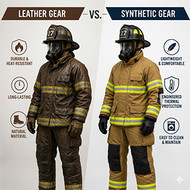
Leather firefighter gear is durable and heat-resistant, while synthetic gear is lighter and offers engineered thermal protection. Most U.S. fire departments now favor synthetic turnout coats and pants for NFPA compliance and ease of care. However, leather remains the top choice for helmets and boots due to its long lifespan.
You pull on your gear in the dark. The alarm is already sounding. There is no time to second-guess what you are wearing. That split-second trust you place in your equipment is exactly why the leather vs synthetic debate matters more than most firefighters realize.
Choosing the wrong material does not just affect comfort. It affects survival. Understanding what each material delivers under pressure can mean the difference between walking out and not.
This guide breaks it all down with real data, clear comparisons, and practical guidance for every type of department.
What Is Firefighter Turnout Gear?
Turnout gear, also called bunker gear or PPE, protects firefighters from heat, flame, steam, and chemical exposure. A complete set includes five core components:
- Helmet to shield the head and neck from impact and radiant heat
- Turnout coat to protect the torso and arms from flames and smoke
- Turnout pants to cover the lower body, usually worn with suspenders
- Boots to guard feet from heat, puncture, and chemical hazards
- Gloves to protect hands during direct flame and debris contact
The material you choose directly affects weight, protection level, maintenance demands, and long-term cost.
Leather vs Synthetic Firefighter Gear: Head-to-Head Comparison
Choosing between leather and synthetic comes down to six practical factors. Here is how each material performs where it counts.
Lifespan and Long-Term Durability
Leather: Lasts 15 to 20 years or more with proper care. Helmets and leather boots hold up well in heavy structural environments. Made from treated full-grain or top-grain cowhide, leather molds to the wearer over time and resists breakdown under consistent heavy use.
Synthetic: NFPA caps certified turnout gear at 10 years from manufacture. Condition does not extend that limit. Departments that equipped in 2015 or earlier are already inside an active replacement window.
Bottom Line: Leather lasts significantly longer. If your department maintains gear consistently, leather delivers better lifespan value per dollar.
Weight and Mobility
Leather: Noticeably heavier than composite alternatives. That added weight is manageable on shorter incidents but builds into real fatigue during extended operations and long shifts.
Synthetic: Lighter construction improves mobility during search-and-rescue operations. Reduces physical strain where speed and agility matter most. Better suited for confined space work and high-activity deployments.
Bottom Line: Synthetic is the better choice for high-mobility roles and any operation where endurance is a critical factor.
Heat Protection and Safety
Leather: Chars rather than melts under direct flame. That natural behavior is a critical safety advantage in flashover conditions and has kept leather trusted in structural firefighting for over a century. Large urban departments like the FDNY still rely on leather helmets, including their iconic Cairns helmet worn by thousands of active firefighters today.
Synthetic: Delivers measurable thermal protection performance (TPP) ratings. Nomex, Kevlar, and PBI blends are engineered to meet NFPA 1971 standards, the U.S. benchmark for structural firefighting PPE. These ratings tell you precisely how long a material protects skin before a burn injury occurs.
Bottom Line: Both protect effectively when properly certified. What matters is a current NFPA 1971 label, not the material itself. Never purchase uncertified gear regardless of brand or price.
Maintenance and Care
Leather: Requires regular conditioning, careful drying after each incident, and consistent crack inspections. Skipping any step shortens its lifespan significantly and compromises protective performance.
Synthetic: Machine washable and easier to decontaminate after smoke or chemical exposure. U.S. departments spend an estimated $500 to $1,500 per firefighter annually on PPE upkeep, and synthetic's lower maintenance demands help manage that cost meaningfully.
Bottom Line: Synthetic is significantly easier to maintain. For departments managing large rosters or frequent deployments, that difference has a real operational and financial impact.
Cost and Budget Fit
Leather: Boots and helmets range from $200 to $600 per item. Lower entry cost per piece but demands ongoing maintenance investment to protect that spend over time.
Synthetic: Full turnout ensembles range from $800 to $3,000 or more. Departments can offset costs through FEMA's Assistance to Firefighters Grant (AFG), which awarded over $350 million in fiscal year 2023 with PPE among the top funded categories.
Bottom Line: Leather costs less per item upfront. Synthetic offers better total value when grant funding and lower maintenance costs are factored into the full picture.
Tradition and Culture
Leather: Carries over a century of firefighting heritage. Many Northeast departments actively preserve leather helmet traditions as part of their departmental identity. For these teams, leather is not just gear, it is a statement of who they are.
Synthetic: Does not carry the same cultural weight. However, growing departments and volunteer forces increasingly adopt synthetic as their standard without historical expectation holding them back.
Bottom Line: If tradition and departmental identity matter to your team, leather reinforces that culture. If you are building from the ground up, synthetic is the practical and forward-looking standard.
Leather vs Synthetic Firefighter Gear: Quick Comparison
|
Factor |
Leather Gear |
Synthetic Gear |
|
Lifespan |
15-20+ years with care |
5-10 years (NFPA cap: 10 years) |
|
Weight |
Heavier, causes fatigue on long shifts |
Lighter, improves mobility |
|
Heat Protection |
Chars, does not melt |
Engineered TPP ratings, meets NFPA 1971 |
|
Maintenance |
Conditioning and hand cleaning required |
Machine washable, easier decontamination |
|
Upfront Cost (USA) |
$200-$600+ for helmets and boots |
$800-$3,000+ for full turnout ensembles |
|
Best Use |
Helmets, boots, heavy structural work |
Turnout coats, pants, high-mobility ops |
NFPA 1971 Explained: The Standard Every Firefighter Should Know
2025 Update: The 2023 edition of NFPA 1971 introduced stricter carcinogen reduction requirements for outer shell fabrics. Always confirm your supplier references the 2023 edition before purchasing.
NFPA 1971 governs all structural firefighting PPE in the United States. It sets minimum requirements for thermal protection, flame resistance, moisture barriers, and seam strength.
Both leather and synthetic gear can meet this standard. However, modern synthetic turnout systems are typically built to comply from the start, while older leather gear may not carry current certification.
Newer materials like PBI Matrix blends and Spacer fabric technology have emerged in direct response to the updated standard, offering better char resistance and improved breathability over older designs.
If your department receives FEMA's Assistance to Firefighters Grant (AFG), NFPA-certified gear is typically required for eligibility. The AFG program awarded over $350 million in fiscal year 2023, with PPE among the top funded categories.
How to Choose the Right Firefighter Gear for Your Department
When to Choose Leather Firefighter Gear
Choose leather when long-term durability and total cost of ownership matter most. It suits helmets and leather boots in heavy structural environments.
It also works well for departments with the discipline and resources to maintain it consistently. If your team's identity is built around tradition, leather reinforces that culture in a way synthetic materials cannot replicate.
When to Choose Synthetic Firefighter Gear
Choose synthetic when NFPA compliance, lighter weight, and low-maintenance protection top your list. It is the practical choice for volunteer departments managing large rosters on limited budgets.
It also works best for full turnout coat-and-pants ensembles where mobility and easy decontamination are priorities. Browse our Police, Fire and EMS section to explore certified gear options for your department.
Final Thoughts on Leather vs Synthetic Firefighter Gear
Leather and synthetic gear are not competitors. They are complements. Leather brings decades of proven structural protection and a cultural weight that matters to many departments. Synthetic materials deliver engineered thermal performance and the practical convenience that growing teams depend on.
The smartest setup for most firefighters is a hybrid approach. Pair a synthetic turnout coat and pants with quality leather boots and helmet for the best of both worlds.
The gear that keeps you safest is the gear you maintain, trust, and understand completely. For departments looking to honor their service, firefighter flags and mourning cords are available for ceremonial use.
"The best firefighter gear isn't about tradition or technology. It's about what keeps you safest when it matters most."
FAQs
Is leather gear still used in U.S. fire departments
Yes. Leather remains widely used for helmets, boots, and gloves, particularly across Northeast departments. While synthetic materials dominate full turnout ensembles, leather components remain standard across many U.S. departments.
Is synthetic gear safer than leather for firefighting?
Certified synthetic gear typically delivers more measurable thermal protection under NFPA 1971. High-quality leather gear can meet the same standard. What matters most is whether the gear carries a current certification, regardless of material.
How long does firefighter gear last?
NFPA recommends retiring certified turnout gear within 10 years of manufacture. Leather boots and helmets can serve 15 to 20 years with proper care. Synthetic turnout coats and pants typically last 5 to 10 years depending on use and maintenance.
Which is better for long shifts?
Synthetic gear is lighter and more breathable, making it more comfortable over extended operations. Leather fits well once broken in, but its added weight builds noticeable fatigue during prolonged incidents.