
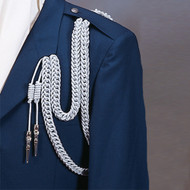
Shoulder Cord vs Aiguillette - Key Differences Explained Simply
Mar 9th 2026
If you’ve ever seen a braided rope on a military uniform and wondered whether it’s a shoulder cord or an aiguillette, you’re not alone. Most people, including writers, retailers, and even some cadets, mix them up.
They look similar at a glance.
They are not the same.
So let’s answer the real question clearly:
What are the main differences between a shoulder cord and an aiguillette?
The difference comes down to purpose, placement, complexity, and regulation.
One is usually simple and functional.
The other is formal, ceremonial, and more elaborate.
And once you see the distinction, you won’t confuse them again.
What Is a Shoulder Cord?
A shoulder cord is a braided cord worn on the shoulder seam of a uniform. It is typically secured under the shoulder epaulet and hangs in a single loop.
In the context of the United States Army, only one shoulder cord is officially authorized for wear under Army Regulation 670-1:
- The Infantry blue cord
That cord identifies branch membership, not rank, not awards, not personality.
In JROTC programs, shoulder cords may represent activities such as drill team, marksmanship, honor guard, or academic achievement. But those are program-level recognitions, not active-duty uniform distinctions.
Key Features of a Shoulder Cord:
- Usually single braided strand
- Loops once
- No metal tips
- Minimal hardware
- Functional identification
It’s straightforward. Clean. Direct.
What Is an Aiguillette?
An aiguillette is a more complex, ornamental braided cord worn on ceremonial or formal military uniforms. Unlike a shoulder cord, it often includes multiple strands and metal tips (called “aglets”).
The aiguillette has European origins and historically identified aides-de-camp or high-ranking officials.
In the United States, aiguillettes are commonly worn by:
- Military aides to senior officers
- Members of ceremonial units
- White House military staff
- Formal honor guards
They are more decorative and symbolize position or appointment rather than branch.
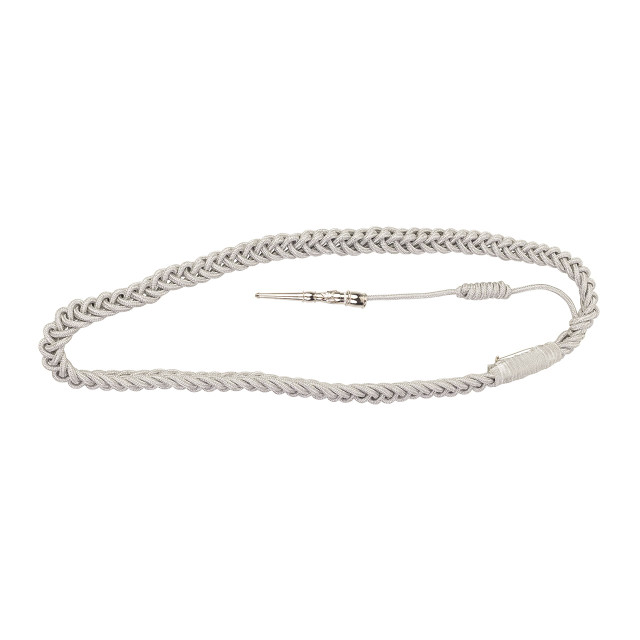 Aiguillettes: USAF Honor Guard
Key Features of an Aiguillette:
- Multiple braided strands
- Often gold or metallic
- Metal tips (aglets)
- More elaborate draping
- Worn for ceremonial authority
It’s more intricate. More visible. More formal.
Shoulder Cord vs Aiguillette, Direct Comparison
Here’s the difference clearly laid out:
|
Feature |
Shoulder Cord |
Aiguillette |
|
Purpose |
Branch or activity ID |
Ceremonial appointment |
|
Design |
Single braid |
Multiple braids |
|
Metal Tips |
No |
Yes |
|
Complexity |
Simple |
Ornate |
|
Usage |
Everyday (where authorized) |
Formal events |
|
Regulation |
Strictly limited in U.S. Army |
Authorized for specific ceremonial roles |
If you remember nothing else, remember this:
A shoulder cord identifies.
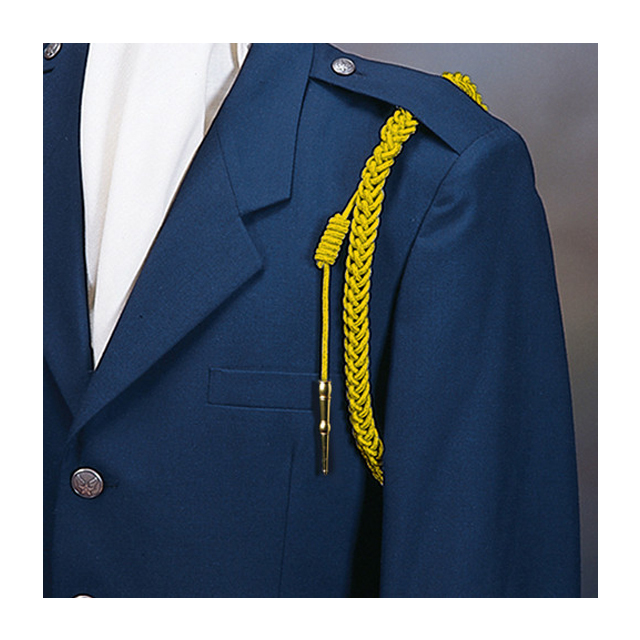 Aiguillettes: USAF Honor Guard
Historical Background, Why They Look Similar
Both originated from practical military lanyards used in European armies.
Over time:
- The simpler cord evolved into branch identifiers
- The more elaborate version became ceremonial distinction
The United States adopted limited use of both but standardized heavily compared to European systems.
American military uniforms prioritize clarity over ornamentation.
Tradition remains, but it is restrained.
Why People Confuse Them
There are three common reasons:
- Online retailers label them interchangeably.
- Cadet programs use simplified ceremonial versions.
- Movies exaggerate uniform accessories.
In reality, the military is extremely specific about uniform items. A decorative braid isn’t automatically an aiguillette, and not every cord is an official military issue.
Terminology matters because regulation matters.
Placement Differences
Another major difference lies in how they’re worn.
Shoulder Cord Placement:
- Secured under the epaulet
- Loops once under the arm
- Sits tight and controlled
Aiguillette Placement:
- Attached to shoulder seam
- May wrap around the arm
- Often anchored with a button or hook
- Drapes in layered loops
An aiguillette looks intentionally dramatic.
A shoulder cord looks functional.
Who Wears an Aiguillette?
In U.S. military contexts, aiguillettes are worn by:
- Military aides to generals or senior officials
- Presidential support personnel
- Ceremonial guard members
They are not everyday uniform pieces.
They signify assignment to a prestigious or formal role.
You don’t “earn” an aiguillette permanently.
You wear it while holding the position.
When the assignment ends, so does the aiguillette.
Who Wears a Shoulder Cord?
In active-duty Army policy:
Only Infantry soldiers wear a shoulder cord, specifically the light blue Infantry cord.
In cadet programs:
Participants may wear cords tied to activities like drill or marksmanship.
In other branches:
Shoulder cord usage varies and is tightly controlled.
The key difference is scale:
Shoulder cords are limited and standardized.
Aiguillettes are appointment-based and ceremonial.
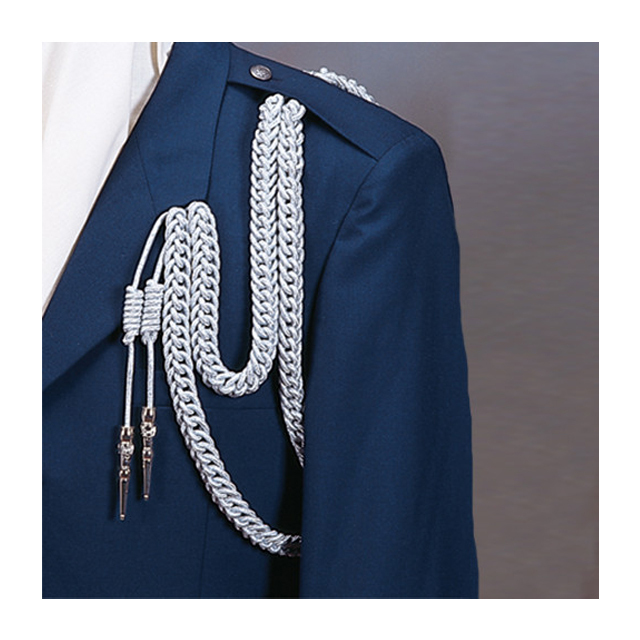 Aiguillettes: USAF Regulation Dress
Visual Impact, Subtle vs Formal
If you compare the two in appearance:
- A shoulder cord blends into the uniform
- An aiguillette draws attention
One signals internal structure.
The other signals formal distinction.
Both matter, but for different reasons.
Common Myths (Cleared Up)
Myth: They are interchangeable terms.
Reality: They are distinct uniform items with different regulations.
Myth: Both show rank.
Reality: Neither replaces rank insignia.
Myth: Anyone can wear them for decoration.
Reality: Unauthorized wear violates uniform policy.
Myth: They are earned like medals.
Reality: Shoulder cords may indicate branch; aiguillettes indicate appointment.
The Functional Philosophy Behind Both
Military uniforms are built on clarity and hierarchy.
Shoulder cords solve one problem:
Quick branch or activity recognition.
Aiguillettes solve another:
Visible identification of aides or ceremonial authority.
Different problems. Different solutions.
That’s why they coexist without overlapping.
Why Precision in Terminology Matters
If you’re writing about uniforms, selling ceremonial attire, or educating cadets, accuracy isn’t optional.
Calling a shoulder cord an aiguillette is like calling a lieutenant a captain.
Close isn’t correct.
And in military systems, precision equals professionalism.
Final Answer,
Here’s the simple version:
- A shoulder cord is usually a single braided strand used for branch or activity identification.
- An aiguillette is a multi-strand ceremonial braid with metal tips worn for formal appointments.
One is structured and practical.
The other is formal and ornamental.
They may look related, because historically they are, but they serve entirely different functions in modern uniform standards.
 Shoulder Cords with Pins: One Color
Once you understand that distinction, the confusion disappears.
And next time you see braided cords on a uniform, you’ll know exactly what you’re looking at.
FAQs
What is the difference between an aiguillette and a lanyard?
An aiguillette is a formal, braided shoulder cord worn on dress uniforms to indicate ceremonial appointment or aide status. A lanyard is typically a simpler cord used to secure equipment like whistles or firearms. The aiguillette is decorative and symbolic, while the lanyard is functional.
What is the purpose of an aiguillette?
The purpose of an aiguillette is to visually identify a soldier serving in a ceremonial, aide, or special appointment role. It signifies assignment to a distinguished position rather than rank. It is worn only while holding that duty and is removed once the assignment ends.
What do the colors of the aiguillette cords mean?
Aiguillette colors vary by country, branch, and assignment. In many systems, gold indicates senior ceremonial or aide roles, while other colors may reflect specific units or functions. There is no universal color chart, as meanings are determined by regulation within each military organization.
What shoulder does the drill aiguillette go on?
The drill aiguillette is typically worn on the right shoulder, though placement depends on unit regulation and country-specific uniform policy. It is secured under the shoulder strap and drapes across the front. Always follow official uniform guidelines to ensure proper and authorized wear.