
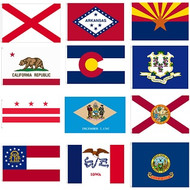
US State Flag Meanings Decoded: What Your State Flag Really Represents
Dec 8th 2025
Some things in life change, careers, addresses, relationships. But one thing never does: where you come from. A US State Flag is more than colors and patterns. It’s a reminder of home, of grandparents’ stories, of childhood places, of the pride that still lives in every American no matter where they go. When a person hangs their state flag in an office, lobby, school, or home, they’re not decorating, they’re declaring identity.
This guide breaks down exactly what your US State Flag represents and why choosing the right one matters for anyone who values heritage, history, and belonging.
Why Every US State Flag Tells a Story
Each US State Flag represents identity and history. Some highlight battles that shaped the nation. Others bring attention to rich natural landscapes or indigenous roots. Many include mottos that show what matters most to their people, bravery, freedom, unity, prosperity, or independence. The U.S. national flag, which many U.S. State Flags echo in symbolism, has 13 horizontal stripes and 50 stars. The stripes represent the original 13 colonies; the stars represent the 50 states.
 State and Territorial Flags: Indoor/Parade Use, Nylon
When a state flag is displayed indoors or outdoors, it silently expresses loyalty and pride. That is why choosing a quality-made US State Flag matters, because it isn’t just a flag. It’s a representation.
Symbolism You Will Notice Across Many US State Flags
Before looking at individual meanings, here are common symbols you’ll see on many state flags, and why they matter.
State flags often include:
- Stars, Unity, national loyalty, and guidance
- Eagles, Power, strength, and independence
- Shields and seals, Responsibility and heritage
- Mountains and rivers, Natural resources and land
- Colors, Character and values of the state
Each item isn’t random. It has its own story, and that’s what makes a US State Flag meaningful and powerful.
Breaking Down the Meaning of Popular State Flags
Before the bullet list, one quick note: every state has deep symbolism, but the most requested and displayed state flags include those that people identify with strongly for cultural or historical reasons.
- Texas
The “Lone Star Flag” stands for independence, pride, and unmatched state identity. The single star represents unity and strength. - California
The bear represents courage, and the red star reflects sovereignty. It symbolizes the state’s resilience and independent spirit. - New York
The blue background represents justice. The shield shows commerce and nature working together, and the motto “Excelsior” means “ever upward.” - Florida
The red cross represents exploration. The seal shows sunshine, water, Seminole culture, and natural beauty, the essence of Florida. - Colorado
The bold “C” represents the state name. The gold symbolizes sunshine, the white stands for snow, and the blue symbolizes the sky. - Georgia
The three pillars represent wisdom, justice, and moderation. The arc symbolizes the U.S. Constitution, and the motto “In God We Trust” reflects deep cultural and patriotic values. - Virginia
The imagery of “Virtus” defeating tyranny represents victory over oppression. The motto “Sic Semper Tyrannis” means “thus always to tyrants,” symbolizing liberty, courage, and the state's historic stand for freedom. - Arizona
The top rays symbolize the 13 original colonies and Arizona’s stunning sunsets. The red and yellow reflect Spanish influence, while the copper star honors Arizona’s long history of copper mining. - Ohio
The “burgee” shape is unique among U.S. state flags. The circle represents the state seal and “O” for Ohio. The stars symbolize the original colonies and Ohio’s place as the 17th state. - South Carolina
The blue background reflects the uniforms worn during the Revolutionary War. The crescent represents resilience, and the palmetto tree honors the defense of Sullivan’s Island, a symbol of strength and victory.
These meanings explain why people want a US State Flag that is accurate, detailed, and made with quality materials, so every symbol stands out clearly.
Colors and Meanings in US State Flags
A paragraph goes here before bullet points. Colors are not selected for beauty alone. They reflect identity and values. When buying or displaying a US State Flag, reading its color message makes the connection stronger.
Common color symbolism:
- Blue, Loyalty, justice, confidence
- Red, Courage, sacrifice, strength
- White, Purity, truth, commitment
- Gold, Honor, generosity, excellence
- Green, Agriculture, growth, land
Understanding these meanings helps buyers appreciate why the details of a US State Flag must be protected with fade-resistant ink and durable stitching.
Why Material Quality Matters for a US State Flag
A flag is only meaningful when it lasts. Poor fabric fades, tears, and frays quickly. A strong US State Flag can resist weather, wind, sunlight, and frequent use.
Buyers should always look for:
- Heavy-duty polyester or nylon for outdoor flags
- Tight stitching and reinforced hems
- Fade-resistant colors for outdoor sun
- Crisp printed details for indoor displays
- Durable grommets for pole mounting
This ensures the US State Flag can be flown proudly without losing its symbolism over time.
Indoor vs Outdoor Display: Choosing the Right Flag
A paragraph comes here before bullet points. Not all flags are made for all places. Picking the right version ensures durability and proper presentation.
- Indoor flags, Best with polished fabric, gold fringe, or display sets
- Outdoor flags, Best with heavy-duty polyester and reinforced stitching
- Ceremonial flags, Typically used with flagpole stands and spear toppers
- Portable flags, Ideal for events, parades, and sports ceremonies
This is why knowing where you’ll display your US State Flag matters before choosing a size and material.
Why People Still Display State Flags Beyond the National Flag
Some people wonder why so many choose to display their state flag even when the U.S. national flag is present. The answer is simple, identity doesn’t end at the country level.
A US State Flag expresses:
- Homeland roots
- Cultural belonging
- Regional pride
- Family origin
- Heritage connection
That makes the US State Flag one of the most personal symbols Americans use in schools, colleges, offices, homes, and public ceremonies.
Where to Display a US State Flag
Placement matters. A flag displayed correctly creates honor and respect.
Common display locations include:
- Front porches or lawns
- School entrances or auditoriums
- Office lobbies
- Government buildings
- Sports arenas and stadiums
- Historical or cultural events
Wherever it stands, a US State Flag reminds people of shared identity and history.
US State Flag Etiquette (Simple Rules Everyone Should Know)
Every state flag display follows federal and traditional rules to maintain respect.
Etiquette basics:
- A state flag should never fly higher than the U.S. national flag
- It should never touch the ground
- It should be replaced when torn or faded
- Lighting is recommended for flags flown at night
Following etiquette safeguards the symbolic meaning of the US State Flag.
Why Quality Matters When Buying a US State Flag
When people shop for a US State Flag, quality is not optional. Cheap flags fade, tear, and lose detail fast. A well-built flag keeps its colors strong and its message clear.
Signs of a high-quality flag include:
- Accurate artwork and symbolism
- Deep and bright colors
- Durable printing or embroidery
- Weather and fade resistance
- Strong stitching and edges
A flag represents history, so it deserves quality construction.
Honor Your Story With the Right State Flag
Every person has a story. Every family has roots. Every state has a legacy worth honoring. When you raise a US State Flag, you’re telling the world where your journey began and what values shaped you. That meaning deserves a flag built with precision, durability, and respect, not a cheap print that fades in the sun or frays in the wind.
If you want a US State Flag that looks bold, lasts long, and represents your identity with pride, choose a supplier that treats history the same way you do, seriously. Explore premium, detailed, and display-ready U.S. state flags from Glendale Parade Store and bring your heritage to life with the quality it deserves.
FAQs
What does the 51st state flag mean?
The term “51st state flag” refers to the idea of adding a new U.S. state. It symbolizes potential future statehood, often used by supporters of Washington D.C., Puerto Rico, or other U.S. territories. It’s not an official flag, but rather a symbolic representation.
Is there a flag for each state?
Yes. Every U.S. state has an official state flag approved by its government. Each design reflects state identity, values, and history. Schools, government buildings, offices, and residents display their flags to show pride and connection to their cultural and regional heritage.
Why are there 7 red and 6 white stripes?
The U.S. flag has 13 stripes to honor the original 13 colonies. Seven stripes are red and six are white. Red represents strength and courage, while white represents purity and unity. The pattern has remained unchanged since 1818 to preserve tradition.
What is the newest state flag?
The newest state flag is the flag of Minnesota, which was adopted on May 11, 2024. It features a dark blue outline of the state with a white, eight-pointed star representing the "North Star State," and a light blue field symbolizing the state's waters.