
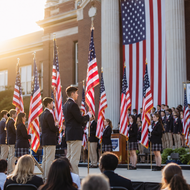
How to Plan a 250th Anniversary Flag Display for Your School or Ceremony
Jun 11th 2026
July 4, 2026, marks 250 years since the signing of the Declaration of Independence, making it one of the most historic national milestones most Americans will ever witness. For schools, civic organizations, JROTC programs, and community ceremony planners, this is far more than a standard patriotic gathering. A well-organized 250th anniversary flag display becomes a meaningful visual tribute that reflects respect for the country’s history and the people participating in the event.
Many guides explain how to display the American flag during routine daily use, but planning a large commemorative display requires additional preparation. Schools and ceremony organizers must think about flag placement, sizing, materials, timing, participant coordination, and proper protocol.
Whether you are organizing an assembly, an outdoor campus presentation, or a formal America 250 flag ceremony, this guide walks through every major planning step so your display is respectful, memorable, and fully prepared before the event day arrives.
Why Planning This Display Is Different from a Typical Flag Ceremony
A 250th anniversary flag display is not the same as a routine school flag raising or civic event. July 4, 2026, represents exactly 250 years since the founding of the United States, making it a once-in-multiple-generations occasion. Because of its significance, schools and community organizations are expected to approach planning with more care and visibility than usual.
Unlike a standard morning flag ceremony, an America 250 flag ceremony often includes larger audiences, public officials, student speakers, color guards, marching units, and media coverage. The more participants involved, the easier it becomes for protocol mistakes or logistical problems to happen if planning is rushed.
Many historians and organizers compare this celebration to the 1976 Bicentennial, but national interest in America 250 is expected to be even broader due to coordinated efforts across schools, cities, and civic organizations. Congress established the America250 Commission in 2016 to help guide commemorative events throughout the country. Schools are expected to play a major role because they connect younger generations directly to the historical significance of the anniversary.
Another detail that matters to many organizers is authenticity. Schools planning a formal 250th anniversary flag display often choose officially licensed commemorative flags because they reflect the significance of the event more accurately than generic patriotic designs.
If your organization is beginning preparations, reviewing available America’s 250th anniversary flag options early can help avoid supply shortages closer to July 2026.
How to Choose the Right Flag and Size for Your Setting
Selecting the proper materials and sizing is one of the most overlooked parts of planning a 250th anniversary flag display. The wrong fabric or incorrect dimensions can affect both appearance and durability during the ceremony.
Match Flag Material to Your Venue Conditions
Nylon remains one of the most practical choices for schools and public ceremonies. It is lightweight, dries quickly, and displays vibrant color in both indoor and outdoor environments. For many organizers planning an America 250 flag ceremony, nylon works well because it balances appearance with ease of handling during presentations and flag raising.
Poly-cotton flags provide a softer, more formal drape that looks especially appropriate in auditoriums, gymnasiums, classrooms, and ceremonial stages. These are commonly used when the flag will remain indoors throughout the event. However, they are not ideal for outdoor weather exposure.
Polyester flags are heavier and designed for demanding outdoor conditions. If your campus flagpole experiences strong summer winds or continuous outdoor exposure around Independence Day events, polyester may be the best long-term option for your 250th anniversary flag display.
When considering how to display the American flag professionally during a commemorative event, matching the fabric to the venue environment helps maintain the display’s appearance throughout the ceremony.
Match Flag Size to Your Venue
Flag sizing matters more than many organizers realize. A flag that appears too small can become visually lost during a large public gathering, while oversized flags may overwhelm indoor spaces.
3x5 Flag: Best suited for classrooms, indoor flag stands, smaller ceremony spaces, and residential-size poles where attendees are seated closer to the display.
4x6 Flag: Ideal for school gymnasiums, auditoriums, and medium outdoor spaces because it offers stronger visibility during assemblies and formal presentations without becoming difficult to manage.
5x8 Flag: Recommended for large public gatherings, campus buildings, memorial spaces, and tall outdoor poles where the flag needs to remain visible from a greater distance.
General Sizing Rule: For balanced proportions, the flag length should measure approximately one-quarter of the total height of the flagpole.
Planning Tip: Schools organizing a formal 250th anniversary flag display should order at least one backup flag, especially as nationwide demand for commemorative flags is expected to rise closer to July 2026.
US Flag Code Rules Every School and Ceremony Organizer Must Follow
The United States Flag Code establishes the federal guidelines that explain how to display the American flag correctly in public and ceremonial settings. While many schools are familiar with basic flag etiquette, commemorative events require additional attention because displays often involve multiple flags and larger audiences.
Correct Flag Positioning and Precedence
Under the US Flag Code, the American flag always occupies the position of highest honor. During a 250th anniversary flag display, commemorative or specialty flags must never be placed above the US flag.
If multiple flags share the same pole, the American flag must remain at the top. When separate poles of equal height are used, the US flag should appear on the observer’s left side. If the poles are different heights, the American flag belongs on the tallest pole.
Indoor stage presentations also follow specific rules. In crossed-staff displays, the staff of the US flag should remain in front of all others. For wall-mounted displays behind a speaker, the American flag should appear to the audience’s left.
Understanding how to display the American flag correctly becomes especially important during televised ceremonies, school assemblies, and public commemorations, where improper positioning can quickly draw attention.
Flag Code Violations Schools Commonly Make
Many schools unintentionally make avoidable mistakes during ceremonial planning. One of the most common issues during a 250th anniversary flag display is allowing commemorative flags to appear equal to or higher than the American flag.
Another frequent mistake involves flags touching the ground during raising or lowering procedures. This often happens when volunteers have not practiced beforehand. Schools also sometimes overlook lighting requirements. If a flag remains displayed after dark, proper illumination is required under the Flag Code.
There is also confusion regarding half-staff positioning. The America 250 celebration is commemorative and patriotic in nature, so schools should not automatically lower flags to half-staff unless an active presidential or gubernatorial order specifically requires it.
Knowing how to display the American flag properly helps schools avoid preventable errors while preserving the dignity of the event.
A 6-Step Plan for Organizing Your School or Ceremony Flag Display
Planning a successful 250th anniversary flag display requires more than simply ordering a flag a few days before the event. Schools that prepare early usually experience smoother ceremonies and fewer logistical issues.
Step 1: Define the Purpose and Scope
Start by deciding whether the event will involve a single ceremony, a week-long campus display, or a district-wide celebration. The scale of the event affects flag quantities, hardware needs, staffing, and ordering timelines. A large America 250 flag ceremony involving multiple schools may require several display locations and additional ceremonial equipment.
Step 2: Assess the Venue
Inspect the ceremony location carefully. Existing poles, halyards, cleats, and mounting hardware should all be checked well before the event date. Many organizers planning a 250th anniversary flag display discover damaged hardware only days before the ceremony, creating unnecessary stress and delays.
Step 3: Choose Appropriate Flags and Materials
Select materials based on whether the display will be indoors or outdoors. Match the flag dimensions carefully to the pole height and viewing distance. Schools researching how to display the American flag effectively in larger gymnasiums often benefit from moving up one size larger than their standard classroom flag.
Step 4: Review Accessories and Support Equipment
Ceremonial displays rely heavily on stable stands, secure mounting equipment, and properly functioning hardware. Frayed halyards or unstable bases can distract from an otherwise professional presentation. For a formal America 250 flag ceremony, presentation quality matters as much as protocol compliance.
Step 5: Brief Participants and Practice
Color guards, student presenters, JROTC cadets, and honor guard members should understand exact positioning and movement sequences before the event begins. Even schools familiar with how to display the American flag correctly benefit from at least one full rehearsal to reduce timing errors and confusion.
Step 6: Build a Structured Ceremony Timeline
The flag presentation should feel intentional rather than rushed. Include opening remarks, student participation, musical elements, and a defined closing sequence. A carefully organized 250th anniversary flag display often becomes one of the most memorable moments of the entire celebration for students and attendees alike.
Pre-Event Checklist for Schools and Ceremony Organizers
Even well-planned ceremonies benefit from a final inspection process before the event day arrives.
Equipment and Materials
Before your 250th anniversary flag display, confirm that all flags are clean, untorn, and free from fading. Hardware components including snaps, halyards, and cleats should function properly.
If the display continues after sunset, verify that illumination requirements are fully met. Organizers preparing an evening America 250 flag ceremony should test lighting conditions in advance rather than relying on day-of setup. It is also wise to confirm all shipments and inspect every flag at least one week before the event.
People and Venue
All participants should know their assignments before the ceremony begins. Color guard teams and student flag bearers should practice transitions and positioning several times. Schools researching how to display the American flag during large public events often focus heavily on the flag itself but overlook attendee sightlines and accessibility logistics.
For off-campus ceremonies, secure written approvals from facility managers ahead of time. It is also smart to identify backup participants and spare flags in case unexpected issues arise on the event day. A final walkthrough can help ensure your 250th anniversary flag display proceeds smoothly from start to finish.
Conclusion
Planning a meaningful 250th anniversary flag display requires thoughtful preparation, proper protocol knowledge, and careful coordination between organizers, participants, and venues. From selecting the right flag materials to understanding official display rules, every detail contributes to a respectful and memorable commemoration.
A well-executed America 250 flag ceremony does more than honor history. It creates a lasting educational and patriotic experience for students, families, and community members who gather to celebrate this once-in-250-years milestone. Explore official commemorative options and prepare early by viewing America’s 250th anniversary flags here.
FAQ
How do you display a 250th anniversary flag alongside the standard US flag?
The American flag must always remain in the position of honor. During a 250th anniversary flag display, the commemorative flag should never appear above or equal to the US flag. If both are displayed on separate poles of equal height, the American flag belongs on the observer’s left side.
What size American flag do I need for a school gymnasium or auditorium?
Most school gymnasiums and auditoriums work well with a 4x6 American flag because it offers stronger visibility for larger audiences. Organizers deciding to display the American flag indoors should also consider ceiling height and viewing distance.
Is the official America 250 flag different from a generic commemorative flag?
Yes. The official America 250 flag is produced under licensing connected to the US Semiquincentennial Commission. Generic commemorative flags may use unrelated designs that are not officially recognized for national anniversary observances.
Do schools need to follow the US Flag Code for a 250th anniversary display?
Yes. Schools and ceremony organizers should follow federal flag etiquette guidelines whenever conducting a public America 250 flag ceremony or commemorative event involving the American flag.