 Shop Military & Cadets
 Shop First responders
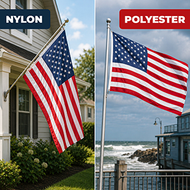
Nylon vs. Polyester American Flag: Which Material Is Best for Your Needs?
May 8th 2026
Every year, thousands of Americans hang a new flag outside their home only to watch it fray, fade, or tear within months. The frustrating part? It was the wrong material for the conditions. Choosing between nylon and polyester is the single most important flag decision you can make. Get it right and your flag could last years. Get it wrong and you are back at the store before summer ends. This guide gives you a clear, fast answer based on your climate, wind, and budget.
Before diving in, if you want to compare available styles and sizes first, our outdoor and indoor US flag range is a good place to start.
What Is a Nylon American Flag?
Nylon is a synthetic fabric known for its light weight and smooth texture. American flags made from nylon are woven tightly but remain thin and supple. That combination allows them to billow and wave in even gentle winds, which is why nylon is the most popular choice for everyday residential use. Our outdoor US flags cover the most popular nylon options for home flagpoles, from standard sizes to heavier builds suited to more exposed locations.
Advantages
- Flies in low wind: Nylon weighs so little that it responds to the slightest breeze and almost always looks active on the flagpole.
- Vibrant colors: Nylon accepts dye exceptionally well, producing bright, sharp reds, whites, and blues that are easy to see from a distance.
- Affordable: Nylon flags cost less upfront than comparable polyester flags.
- Dries quickly: After rain, nylon sheds water fast and rarely stays damp for long.
Limitations
- Less resistant to tearing in strong, sustained winds
- Fades faster than heavier materials under prolonged UV exposure
- Not the best fit for areas with consistent high winds or severe weather
What Is a Polyester American Flag?
Polyester is a denser, heavier synthetic fabric engineered for durability. Flags made from polyester, especially those using SolarMax or two-ply construction, are built to withstand the kind of conditions that shred lighter materials within months.
Advantages
- Outstanding durability: Polyester resists fraying, tearing, and wear under aggressive wind conditions far better than nylon.
- Superior UV resistance: High-quality polyester holds its color longer when exposed to direct sunlight day after day. The AATCC, which sets textile colorfastness standards, recognizes solution-dyed polyester as among the most UV-stable fabric constructions available.
- Built for harsh environments: Coastal salt air, heavy rain, and sustained strong winds are no match for a quality polyester flag.
Limitations
- Heavier weight requires more wind to fly well and can hang limp in calm conditions
- Higher upfront cost compared to nylon
- Less visually dynamic in light wind
Nylon vs. Polyester American Flag: Quick Comparison
Nylon flies beautifully in calm conditions. Polyester holds up where weather gets serious. If you are not sure which one suits your situation, the table below covers everything you need to know at a glance.
|
Feature |
Nylon |
Polyester |
|
Weight |
Light |
Heavy |
|
Best for Wind |
Low to moderate |
High and sustained |
|
Durability |
Good |
Excellent |
|
Color Vibrancy |
Very high |
High |
|
UV Resistance |
Moderate |
Superior |
|
Dries Quickly |
Yes |
Slower |
|
Upfront Cost |
Lower |
Higher |
|
Long-term Value |
Mild climates |
Harsh climates |
|
Best Use |
Residential, indoor |
Coastal, commercial |
When to Choose a Nylon American Flag
- Live in a mild climate with light-to-moderate wind
- Want the most vibrant colors and a flowing appearance
- Are looking for the most budget-friendly option
- Fly your flag seasonally or bring it in during storms
- Are purchasing a flag for everyday residential display
When to Choose a Polyester American Flag
- Live in a coastal, windy, or severe-weather region
- Need a flag that flies 24 hours a day without regular monitoring
- Want maximum long-term durability and fewer replacements
- Are buying for a commercial, government, or institutional setting
- Prioritize lifespan over initial cost
Choosing the Right American Flag Material for Your Environment
Residential Home
The average homeowner flying a flag in a suburban neighborhood with typical wind conditions is well served by nylon. It is affordable, looks great, and will last several years with basic care. If you have been replacing flags every 6 to 12 months, the problem is likely wind exposure rather than product quality. Assess your actual conditions before deciding to upgrade.
Coastal or Windy Area
A homeowner near the beach once replaced a nylon flag three times in two years before switching to a heavy-duty polyester flag. The polyester version lasted through two hurricane seasons with only minor fraying. If you live within a few miles of the ocean or somewhere winds regularly gust above 20 mph, polyester is the clear choice. Our Tough-Tex outdoor flags are built specifically for these conditions and remain one of our most trusted options for coastal and high-wind environments.
Commercial Use
Businesses, schools, and government buildings that fly flags continuously need polyester. These environments demand flags that can survive daily stress without constant replacement. The higher upfront investment pays off quickly in reduced replacement frequency. For indoor lobbies and ceremonial settings, nylon flags with a formal drape are typically the better fit.
Cost vs. Durability: Which Is Better Value?
At face value, nylon wins on price. A quality nylon flag might cost $20 to $40 less than an equivalent polyester flag. But the real comparison is cost per year of use.
In mild conditions, both flags perform comparably. In harsh conditions, a nylon flag may last 12 to 18 months before showing significant wear, while a comparable polyester flag might last 3 to 5 years. Over a ten-year period, you could buy five nylon flags or two polyester flags and spend more on the nylon option overall.
If you live somewhere with reliable weather and light winds, nylon delivers excellent value. If you are in a demanding environment, polyester pays for itself.
Care Tips to Extend Flag Life
Proper care dramatically extends how long your flag lasts, regardless of material.
- Wash gently: Hand wash or use a gentle machine cycle in cold water with mild detergent. Avoid bleach.
- Air dry only: High heat from a dryer weakens both nylon and polyester fibers over time.
- Bring it in during storms: Even polyester flags benefit from being stored during severe weather. Debris is the top cause of premature tearing.
- Rotate the attachment points: Flags wear fastest at the header near the pole. Adjusting how the flag attaches periodically reduces uneven wear.
- Inspect regularly: Check grommets, stitching along the fly end, and any areas that contact pole hardware. Catching small frays early prevents major damage.
Common Mistakes to Avoid
Choosing the cheapest option without checking the material: A low-cost flag from an unknown brand often uses thin, loosely woven fabric regardless of what it claims on the label. Brand and construction quality matter as much as material type.
Ignoring your wind conditions: Many people buy nylon flags and are frustrated by how quickly they wear out. The real issue is flying a lightweight flag in a high-wind area. Match the material to the environment, not just the price tag.
Leaving flags up in extreme weather: Even the toughest polyester flag is not rated for hurricane-force winds. Take your flag down before major storms when possible.
Flying a wet flag for extended periods: While both materials dry quickly, leaving a wet flag wrapped around a pole in cold weather can cause color bleeding and accelerated fabric stress.
Final Verdict: Nylon vs. Polyester American Flag
For most homeowners in mild climates, nylon is the right choice. It is affordable, beautiful, and flies well in everyday conditions.
For anyone in a coastal, high-wind, or demanding outdoor environment, polyester is the smarter long-term investment. It is built to endure what nylon cannot.
Choose for your conditions, not just your budget, and your flag will serve you well for years to come. For more help deciding, our guide on choosing the most durable outdoor American flag walks through the buying decision in practical detail.
FAQs
1. Which flag lasts longer, nylon or polyester?
Polyester typically lasts longer, especially in harsh weather or high-wind environments. In mild conditions, both materials offer comparable lifespans with proper care. In demanding environments, polyester can outlast nylon by two to three times.
2. What is the best flag for high winds?
Polyester is the superior choice for high-wind areas. Its denser weave and heavier construction resist the repetitive mechanical stress of strong, sustained winds far better than nylon.
3. Do nylon flags fade faster than polyester?
Nylon tends to fade faster under prolonged direct sunlight. High-quality polyester flags, particularly those made with SolarMax or solution-dyed fibers, are engineered to resist UV fading and hold their color longer over time.
4. Can I use a nylon flag outdoors?
Yes. Nylon is designed for outdoor use and performs well in most residential settings. It handles light rain and typical weather without issue. For extreme environments, polyester is a better fit.
5. Which flag is better for indoor or ceremonial use?
Nylon is generally preferred for indoor display and ceremonial flags. Its lighter weight gives it a more elegant drape, and its vivid colors make a strong visual impression in controlled environments.