 Shop Cadets & Military
 Shop First responders
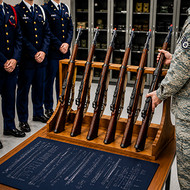
How to Pick the Right Parade Rifle for Your JROTC Unit
Jul 2nd 2026
Choosing a parade rifle for a JROTC unit can have a lasting impact on training quality, competition performance, and equipment costs. Many programs purchase rifles based primarily on appearance or budget, only to discover later that the rifles do not match their cadets' skill levels, competition goals, or drill requirements.
An improperly selected rifle can make it more difficult for cadets to develop consistency in manual-of-arms movements, exhibition routines, and ceremonial presentations.
The right parade rifle should support the way your unit trains and performs. Factors such as weight, balance, durability, branch-specific expectations, and accessory compatibility all influence how well a rifle serves a program over time.
Whether your unit focuses on regulation drill, color guard presentations, inspections, or exhibition performances, selecting the proper equipment helps cadets build confidence and maintain uniformity.
In this guide, we'll explain the different types of rifles used in JROTC programs, what to evaluate before purchasing, branch-specific considerations, and how to identify the best value for your unit.
What Is a JROTC Parade Rifle and Why Choosing the Right One Matters
A JROTC rifle used for drill and ceremonies is a non-firing training rifle designed to replicate the appearance and handling characteristics of historic military service rifles. These rifles are commonly used during inspections, color guard presentations, regulation drill competitions, and ceremonial events.
Unlike classroom equipment, a parade rifle becomes part of a cadet's performance. Every facing movement, shoulder arms command, port arms transition, and inspection sequence depends on consistent rifle handling. If rifles vary significantly in weight or balance, maintaining uniform execution across the formation becomes more difficult.
The quality of the rifle also affects long-term costs. Programs that invest in durable training equipment typically spend less time replacing damaged components and more time focusing on training. Many units begin by evaluating available replica drill rifles that are specifically designed for JROTC and ceremonial use.
Types of JROTC Drill Rifles Available Today
Replica Parade Rifles
Replica rifles are the most widely used option for regulation drill and ceremonial presentations. These models are designed to resemble historic military firearms while remaining non-functional training tools.
Many JROTC programs prefer replica rifles because they closely match the appearance expected during formal military ceremonies. They are also commonly accepted for inspections, color guard events, and drill competitions.
Weighted Training Rifles
A weighted drill rifle is designed to provide handling characteristics similar to traditional service rifles. Additional weight can improve stability during manual of arms movements and help cadets develop better control.
Units that compete frequently in regulation drill often prefer weighted models because they provide a more realistic training experience.
Exhibition Drill Rifles
Exhibition rifles are designed for advanced spinning, tossing, and aerial maneuvers. These rifles are commonly used by teams that compete in exhibition drill categories where speed, control, and rifle manipulation skills are emphasized.
While exhibition rifles can be used for practice, they are not always the best choice for units whose primary focus is ceremonial presentations or regulation drill.
Key Factors to Consider When Selecting a JROTC Parade Rifle
Weight and Balance
Weight and balance influence nearly every drill movement. A rifle that is too heavy can cause fatigue during extended practice sessions, while one that is too light may reduce stability during precision movements.
Balance is equally important. Well-balanced rifles rotate more consistently during spins and transitions, helping cadets maintain control and accuracy throughout routines.
Durability and Build Materials
A JROTC parade rifle may be used hundreds of times during a school year. Hardwood stocks, quality hardware, and durable finishes generally provide longer service life than lower-quality alternatives.
Programs should also consider the availability of replacement parts and maintenance items. Access to compatible rifle accessories can help extend the lifespan of training equipment and reduce replacement costs.
Regulation Compliance by Branch
Before purchasing equipment, instructors should review current drill and competition requirements. While JROTC programs often have flexibility in equipment selection, certain competitions may have specific expectations regarding drill procedures and rifle handling.
Skill Level of Your Cadets
Equipment should match the experience level of the cadets using it. New cadets typically benefit from rifles that are easier to manage while they learn drill fundamentals. More advanced teams may prioritize specific handling characteristics that support competitive drill or exhibition routines.
JROTC Parade Rifle Weight Standards and What They Mean for Performance
There is no universal weight requirement that applies to every parade rifle, but consistency across the unit is critical. When all cadets train with rifles that have similar weight and balance, formations tend to perform more uniformly.
Weight also affects endurance. Heavier rifles may provide greater stability, while lighter rifles can reduce fatigue during lengthy practices. The ideal choice depends on the unit's training schedule, competition goals, and the physical capabilities of its cadets.
Branch-Specific Requirements for Drill Rifles
Army JROTC Rifle Standards
Army JROTC drill teams often use rifles that replicate traditional military service rifles. Consistency, durability, and compatibility with regulation drill movements are usually top priorities.
For Army JROTC units preparing for major competitions, reviewing the Army JROTC National Drill Championships Standard Operating Procedures can help instructors understand current competition standards.
Air Force JROTC Rifle Standards
Air Force JROTC programs often place significant emphasis on precision and synchronization. Equipment that promotes consistent handling characteristics across the team is particularly valuable.
Marine Corps JROTC Rifle Standards
Marine Corps JROTC units frequently maintain rigorous drill schedules. For this reason, durability is often a major consideration when selecting a parade rifle.
Navy JROTC Rifle Standards
Navy JROTC programs may participate in regulation drill, color guard presentations, and exhibition performances. Equipment selection should reflect the activities that make up the majority of the unit's training program.
Parade Rifle vs. Exhibition Drill Rifle: Which Does Your Unit Need?
Many instructors use the terms interchangeably, but they are not always the same.
A parade rifle is designed primarily for inspections, ceremonies, color guard events, and regulation drill competitions. These rifles prioritize traditional appearance, consistency, and proper handling.
An exhibition drill rifle is designed specifically for advanced performance routines involving spins, releases, and aerial maneuvers.
If your unit participates primarily in ceremonial events and standard drill competitions, a traditional parade rifle will usually be the better investment.
Popular JROTC Parade Rifle Models and What Sets Them Apart
1903 Springfield Replica Rifles
The 1903 Springfield remains one of the most recognizable ceremonial rifle styles used in drill programs. Its traditional military appearance and established history make it a popular choice for many JROTC units.
M1 Garand Replica Rifles
The M1 Garand replica is valued for its historic significance and substantial feel during drill movements. Many instructors appreciate its balance and suitability for regulation drill applications.
DrillAmerica Rifle Series
DrillAmerica rifles are widely used throughout JROTC programs because they are specifically designed for drill and ceremonial use. Their availability and compatibility with common accessories make them a practical option for many units.
Rifle Accessories and Add-Ons to Consider for Your JROTC Unit
Rifle Slings
A properly fitted rifle sling contributes to a professional appearance during ceremonies, inspections, and color guard presentations. It can also improve consistency across the formation when properly adjusted.
Butt Plates and Replacement Parts
Routine use eventually causes wear. Maintaining access to replacement components allows units to keep equipment in service longer and avoid unnecessary replacement costs.
Carrying Cases and Storage
Protective rifle cases help prevent damage during transportation and storage. This is especially important for units that regularly travel to competitions, inspections, and ceremonial events.
How to Evaluate Value When Buying JROTC Drill Rifles in Bulk
The lowest purchase price does not always represent the best value. Programs should evaluate durability, replacement part availability, accessory compatibility, and expected service life before making a decision.
Bulk purchases should also take future growth into account. If the unit expects to expand, selecting a rifle model that remains readily available can simplify future purchases and maintain consistency across the program.
After new rifles are issued, instructors should complete the appropriate rifle registration process and maintain accurate inventory records for accountability purposes.
Conclusion
Selecting the right parade rifle requires more than comparing prices. Weight, balance, durability, competition requirements, and training objectives all influence how effectively a rifle will serve a JROTC program.
By evaluating these factors before purchasing, instructors can equip cadets with rifles that support both skill development and long-term performance.
Units looking to compare available options should review a complete selection of JROTC parade rifles and drill rifles designed for ceremonies, inspections, color guard presentations, and competitive drill programs.
Frequently Asked Questions
What is the standard weight for a JROTC parade rifle?
For standard JROTC regulation drill and color guard, rifles generally weigh between 8 and 9 pounds to reflect the feel of historic firearms. Lighter models, usually weighing 4 to 5 pounds, are often used for parades, beginner training, or specialized Alternative Arms exhibition events. Actual weight depends on the manufacturer and model, and most units prioritize consistency across all rifles over meeting a precise weight target.
Can JROTC units use real decommissioned rifles for drill?
Policies vary by organization and school district. Many modern programs use purpose-built training rifles because they provide consistency, safety, and easier maintenance.
What is the difference between a parade rifle and a drill rifle?
A parade rifle is typically used for ceremonies, inspections, and regulation drill. The term drill rifle can refer to rifles used for both regulation and exhibition drill activities.
How do I know if a parade rifle meets JROTC regulations?
Review current competition rules, branch guidance, and event requirements before purchasing equipment. You should also check its weight, components, configuration, and demilitarization, all these as per branch-specific SOPs.
How many drill rifles does a JROTC unit typically need?
Most JROTC units need about 14 to 18 demilitarized drill rifles to properly outfit their competitive drill teams and color guard. In many cases, the sponsoring military branch provides a standard allotment to each unit. For instance, Air Force JROTC has traditionally issued 18 rifles, but the exact quantity ultimately depends on the number of cadets participating in the unit’s armed teams.