
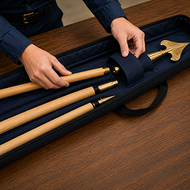
How to Store and Transport Guidon Poles Safely Between Competitions and Events
Jun 19th 2026
A chipped finish, bent shaft, or damaged finial can turn a well-maintained piece of equipment into a distraction before a competition even begins. For JROTC instructors, color guard team leaders, and cadre members responsible for transporting unit equipment, preventing damage is just as important as maintaining performance standards.
While most guidance focuses on drill execution and presentation, far less attention is given to equipment care between events. Understanding how to transport guidon poles correctly can significantly extend their lifespan and reduce unnecessary replacement costs.
This guide covers step-by-step how to transport guidon poles, including proper disassembly, carrying case selection, vehicle transport practices, guidon pole storage tips, and post-event inspections to help keep guidon poles competition-ready throughout the year.
Why Guidon Poles Get Damaged in Transit and Storage
Before discussing how to transport guidon poles, it helps to understand where damage commonly occurs. Most guidon poles are constructed from lightweight ash hardwood and finished with a protective lacquer coating.
They typically feature a 1.25-inch diameter shaft and a chrome-plated brass screw joint that allows the pole to separate into two sections for easier handling and storage. Although durable during ceremonial use, several components are vulnerable during transport.
The finial is often the first part to sustain damage. Whether using a spear or spade-style ornament, the finial extends beyond the pole and lacks structural support when stored improperly. A sudden impact inside a vehicle can easily bend or scratch the ornament.
The lacquer finish is another common casualty. Loading equipment into trailers, buses, or cargo areas can expose the pole to rough surfaces that leave scratches or abrasions. Even minor finish damage can eventually expose the wood underneath.
The screw joint also requires attention. Dirt, grit, and debris can collect in the threaded connection over repeated assembly and disassembly cycles. If left uncleaned, the threads may wear prematurely or become difficult to secure properly.
At the base of the pole, the ferrule can crack or deform if the pole is dropped or struck against hard surfaces during loading. Moisture presents an even greater long-term threat. Ash wood can absorb humidity when exposed for extended periods, leading to swelling, warping, and deterioration of the finish.
If your unit is evaluating new equipment or replacing older poles, it helps to understand the differences in construction quality before making a purchase. This video, “The Best Guidon You Can Buy for Your Unit”, breaks down key features that contribute to durability, performance, and long-term reliability in ceremonial use.
How to Disassemble a Guidon Pole Before Every Trip
One of the most important steps in learning how to transport guidon poles safely is proper disassembly. Most modern guidon poles are intentionally designed as two-piece systems. Taking advantage of this design reduces stress on the shaft and minimizes the risk of impact damage during travel.
Follow these steps before every transport:
- Unscrew the upper and lower pole sections at the threaded joint.
- Carefully remove the finial from the top section.
- Inspect all threaded connections for dirt, grit, or signs of wear.
- Wipe threads with a clean, dry cloth before packing.
- Place the finial in a padded compartment or wrap it in soft cloth.
- Keep matching pole sections together when transporting multiple poles.
Never transport a fully assembled guidon pole loose inside a vehicle. Even short-distance travel can cause the pole to shift, strike other equipment, or become damaged during sudden stops. If your unit manages several guidons, consider labeling each set. This simple step prevents mismatched sections and speeds up assembly upon arrival at the venue.
For units evaluating new equipment, understanding pole construction is equally important. This guide on choosing the right guidon pole provides useful information about selecting equipment that matches your program's needs.
Choosing the Right Carrying Case for Your Guidon Pole
A quality guidon pole carrying case provides the first layer of protection against transportation-related damage. The most common individual cases are made from heavyweight water-repellent nylon and are available in military-standard colors such as black and olive drab. The most important feature to look for is a reinforced finial pocket designed to protect the ornament from impact.
Common sizes include:
- 48-inch cases for poles up to 8 feet
- 63-inch cases for poles up to 10 feet
For most JROTC and color guard programs using a 9-foot 6-inch pole, the 63-inch guidon pole carrying case is generally the appropriate option. Units transporting multiple guidons may benefit from a larger color guard pole travel bag. These bags typically use durable 400-denier water-repellent nylon and feature full-length zipper closures for easy loading.
When using a color guard pole travel bag, alternate pole sections so that finials and ferrules rest at opposite ends. This distributes weight more evenly and reduces pressure on individual components. Selecting the proper guidon pole carrying case is one of the simplest ways to prevent damage before it occurs.
How to Load and Secure Guidon Poles in a Vehicle
Even the best storage equipment cannot compensate for poor loading practices. When considering how to transport guidon poles, placement inside the vehicle matters just as much as the carrying case itself.
Always lay the guidon pole carrying case flat in a cargo area, luggage compartment, trailer, or designated floor space. Poles should never stand upright inside a moving vehicle where sudden stops can cause them to fall. Secure bags with straps or bungee cords to prevent sliding during turns or abrupt braking.
Heat exposure should also be considered. Vehicles parked in direct sunlight can reach temperatures high enough to affect lacquered finishes over time. Whenever possible, avoid placing guidon poles near heaters, engine compartments, or areas prone to excessive heat.
Do not stack heavy equipment on top of a guidon pole carrying case or color guard pole travel bag. Compression can damage both the shaft and finial, even when they are stored inside protective coverings. For teams traveling by air, airline policies regarding oversized ceremonial equipment vary considerably. Contact the carrier before booking to confirm baggage requirements and restrictions.
How to Store Guidon Poles Between Events
Knowing how to transport guidon poles is not enough; proper storage plays a major role in preserving equipment condition throughout the season. Many effective guidon pole storage tips focus on reducing unnecessary stress and controlling environmental exposure.
Storing Guidon Poles Between Weekly Practices
When a guidon pole remains assembled between regular practices, it should be stored upright in a dedicated floor stand. Leaning a pole against a wall may seem harmless, but over time, the finial can bend or break under the pole's own weight.
One of the most overlooked guidon pole storage tips is choosing the right storage environment. Store equipment in a dry, temperature-stable room away from excessive humidity. Areas near locker room showers, utility spaces, or damp basements should be avoided.
Off-Season and Long-Term Guidon Pole Storage
Long-term storage requires additional precautions. Disassemble the pole completely and place all components inside a padded guidon pole carrying case or color guard pole travel bag. Store the case on a dedicated shelf where it will not be disturbed by routine equipment movement.
Among the most important guidon pole storage tips is protecting the wood from seasonal humidity fluctuations. Climate-controlled spaces help prevent swelling, warping, and finish degradation. Before storing, wipe all metal components with a dry cloth to help reduce corrosion during extended periods of inactivity.
Post-Event Guidon Pole Inspection and Care
Learning how to transport guidon poles effectively does not end when the event concludes. Post-event inspection helps identify small issues before they become expensive repairs. After every outdoor event, wipe the entire pole with a soft, dry cloth to remove moisture, dust, and debris.
Inspect the screw joint threads carefully. Any grit left behind can contribute to thread wear during future assembly cycles. Check the finial for chips, cracks, looseness, or other visible damage. Addressing minor issues early helps avoid equipment failures at future competitions. Inspect the ferrule for signs of deformation caused by repeated ground contact.
The shaft should also be examined for scratches, dents, or finish damage. Many units maintain equipment logs so teams can document repairs and replacement needs well before major competitions.
Additional care becomes especially important following rainy or humid events. Allow damp pole sections to air dry completely before placing them in a color guard pole travel bag or guidon pole carrying case. Sealing moisture inside a case can accelerate warping and finish deterioration.
The guidon flag itself should also be completely dry before being stored with the pole. Finally, ensure threaded connections remain properly tightened before final storage. This helps reduce unnecessary wear caused by loosely fitted components.
Conclusion
Understanding how to transport guidon poles safely comes down to a few consistent practices: disassemble equipment properly, use a protective carrying case, secure poles during travel, store them in a controlled environment, and perform inspections after every event.
The same attention to detail expected during a competition should extend to equipment care between events. Proper handling protects your investment and helps ensure every guidon pole remains ready for the next performance. Explore Glendale’s selection of high-quality guidon poles designed for JROTC units, color guards, and ceremonial teams.
FAQ
Should guidon poles be disassembled before transport to a competition?
Yes. Most guidon poles are designed with a two-piece screw joint specifically for transportation and storage. Disassembling the pole reduces the risk of bending, impact damage, and unnecessary stress during travel.
What size carrying case do I need for a 9ft 6in guidon pole?
A 63-inch guidon pole carrying case is generally recommended for a 9-foot 6-inch guidon pole. This size accommodates the disassembled sections while providing adequate protection.
How should guidon poles be stored when not in use between events?
For short-term storage, assembled poles should remain upright in a floor stand. For long-term storage, disassemble the pole and place it inside a padded case in a climate-controlled environment.
How do you protect the finial ornament when storing a guidon pole?
The finial should be removed before storage and placed in a reinforced finial pocket or wrapped in soft protective material. This reduces the risk of scratches, dents, and bending.
What should you check on a guidon pole after a competition before putting it away?
Inspect the finial, screw joint threads, ferrule, and shaft finish. Remove dirt and moisture, allow all components to dry completely, and document any damage that may require repair or replacement before the next event.