 Shop Military & Cadets
 Shop First responders
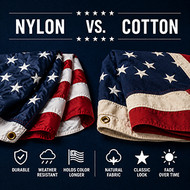
The Difference Between Nylon and Cotton American Flags: Which One Lasts Longer
Jul 13th 2026
Choosing between a nylon flag and a cotton American flag is one of the most common questions for individuals, organizations, schools, veterans' groups, and military units purchasing a new flag. While both materials have a long history in American flag production, they are designed for different purposes and environments.
Understanding the differences between these materials can help you select a flag that matches your display needs, budget, and expected lifespan.
This guide explains how nylon and cotton flags are made, how they perform in different conditions, and which option may be the better choice for your specific application.
Why Flag Material Matters More Than Most People Realize
The material of an American flag directly affects its durability, appearance, weather resistance, and maintenance requirements. A flag displayed outdoors year-round faces challenges from wind, rain, sunlight, and changing temperatures. Indoor and ceremonial flags face different demands, where appearance and tradition may matter more than weather resistance.
Selecting the right material helps ensure that the flag continues to represent the nation with dignity and remains suitable for its intended purpose.
For those interested in the broader significance of the Stars and Stripes, understanding the legacy, symbolism, etiquette, and upcoming 250th anniversary of the American flag provides valuable historical context.
What Is a Nylon American Flag
A nylon American flag is manufactured using lightweight synthetic fibers designed to withstand outdoor conditions while maintaining vibrant colors and flexibility.
How Nylon Flags Are Made
Most nylon flags are produced using durable woven nylon fabric. The material is dyed with fade-resistant colors and sewn together using reinforced stitching techniques. Quality outdoor flags often include embroidered stars and reinforced fly ends to improve longevity.
Key Characteristics of Nylon Flag Fabric
Nylon remains one of the most popular materials for outdoor American flags because of several performance advantages:
- Lightweight construction
- Quick-drying properties
- Strong resistance to moisture
- Bright, vivid colors
- Good flexibility in light winds
- Excellent overall durability
These characteristics make nylon particularly suitable for residential, commercial, and institutional outdoor displays.
Common Uses for Nylon American Flags
Nylon flags are commonly used for:
- Residential flagpoles
- Schools and universities
- Government facilities
- Military installations
- Commercial properties
- Patriotic displays are flown year-round
Because nylon flies easily even in mild breezes, it remains a preferred option for many outdoor flag displays.
What Is a Cotton American Flag
A cotton American flag is traditionally manufactured using natural cotton fibers. Before synthetic materials became common, cotton was among the most widely used materials for American flags.
How Cotton Flags Are Made
Cotton flags are produced from woven natural cotton fabric and sewn according to established flag manufacturing standards. Many ceremonial and historical reproduction flags continue to use cotton because of its traditional appearance.
Some cotton flags are manufactured to government specifications for ceremonial applications and official presentations.
Key Characteristics of Cotton Flag Fabric
Cotton offers qualities that differ significantly from nylon:
- Traditional appearance
- Rich texture
- Heavier weight
- Natural fabric composition
- Softer drape
- Historic authenticity
Many people appreciate cotton flags because they closely resemble the appearance of flags used throughout much of American history.
Common Uses for Cotton American Flags
Cotton flags are often selected for:
- Historical displays
- Museums
- Memorial exhibits
- Ceremonial presentations
- Educational institutions
- Special commemorative events
Their traditional appearance makes them especially appropriate when historical authenticity is important.
Nylon vs Cotton American Flags: A Direct Comparison
When comparing cotton and nylon flags, a side-by-side view makes the differences easier to see.
|
Category |
Nylon American Flag |
Cotton American Flag |
|
Durability and lifespan |
Typically lasts longer outdoors because synthetic fibers resist moisture, stretching, and general wear. |
Usually wears faster outdoors, especially in rain, humidity, and prolonged sunlight. |
|
Weather resistance and outdoor performance |
Performs well in changing weather, dries quickly after rain, and resists mildew better. |
Absorbs water more readily, which can add weight and speed up deterioration in wet conditions. |
|
Color retention and fade resistance |
Often treated with fade-resistant dyes and generally holds color well in outdoor use. |
Can fade more quickly when exposed to direct sunlight over time. |
|
Weight, drape, and appearance |
Lightweight and moves easily in the wind, creating a bright, active display. |
Heavier with a more traditional drape and texture that many people associate with historic flags. |
|
Care and maintenance requirements |
Requires relatively little maintenance and handles outdoor exposure with less attention. |
Needs more care, especially if exposed to moisture, and benefits from careful storage and inspection. |
|
Price and long-term value |
Often offers stronger long-term value for outdoor display because of its longer service life. |
Can be a worthwhile choice for ceremonial, historical, or indoor use where appearance matters most. |
For most outdoor displays, nylon is the more durable and weather-resistant option. Cotton remains a strong choice when tradition, historical authenticity, or indoor presentation is the priority.
Which Flag Material Performs Better Outdoors
For most outdoor applications, nylon generally delivers superior performance.
High Wind and Rain Conditions
Nylon's lightweight construction helps reduce stress on the flag during moderate weather conditions. It also dries quickly after rainfall, helping prevent moisture-related deterioration. In locations that experience frequent rain or humidity, nylon often outperforms cotton significantly.
UV Exposure and Sun Damage
Prolonged sunlight can affect any flag material over time. However, modern nylon fabrics are typically engineered to resist fading more effectively than cotton. This makes nylon a practical choice in regions with intense year-round sun exposure.
Year-Round Outdoor Display
For continuous outdoor use, nylon remains one of the most recommended options available. Organizations displaying flags daily often choose nylon because it balances appearance, durability, and weather resistance.
Following proper American flag etiquette guidelines can also help maximize the lifespan and respectful display of any flag material.
Which Flag Material Is Better for Indoor and Ceremonial Use
Outdoor performance is only one factor when evaluating a cotton flag vs nylon flag.
Indoor Parade and Display Flags
Indoor presentation flags are often selected based on appearance rather than weather resistance. Cotton's traditional texture and elegant drape can make it attractive for display settings where historical authenticity is valued.
Many organizations also pair presentation flags with professional flag stands, flag ornaments, and ceremonial accessories to create complete indoor displays.
Ceremonial and Casket Flags
Ceremonial settings frequently emphasize tradition and symbolism. Certain cotton flags manufactured to government specifications continue to be used for ceremonial applications because of their historic appearance and formal presentation qualities.
Government and Institutional Settings
Government buildings, military organizations, schools, and civic institutions may use either material depending on intended use. Outdoor installations commonly favor nylon, while indoor ceremonial displays may utilize cotton or other presentation-grade materials.
When Cotton Flags Are the Right Choice
A cotton American flag may be the preferred option when:
- Historical authenticity is important
- The flag is displayed primarily indoors
- A traditional appearance is desired
- The display is temporary or ceremonial
- The flag is intended for educational or museum use
Cotton continues to hold an important place in preserving American flag traditions and historical presentations.
When Nylon Flags Are the Right Choice
A nylon flag is often the best choice when:
- The flag will be displayed outdoors regularly
- Weather resistance is a priority
- Long-term durability matters
- Bright colors are desired
- The flag will fly on a residential or commercial flagpole
For most outdoor applications, nylon offers the strongest combination of performance and value.
Conclusion
When comparing a nylon flag and a cotton American flag, neither material is universally better. Each serves a different purpose.
For outdoor displays, nylon typically lasts longer and performs better against rain, wind, and sunlight. For ceremonial, historical, and indoor applications, cotton continues to offer a traditional appearance that many organizations and institutions value.
Whether you are selecting a flag for a military ceremony, school display, government facility, veterans' organization, or personal flagpole, choosing the right material helps ensure the American flag is displayed with the respect it deserves.
Explore Glendale's collection of American flags and parade essentials to find products designed to support ceremonies, patriotic displays, and military traditions.
Frequently Asked Questions
Does a nylon American flag meet US Flag Code requirements?
Yes. The United States Flag Code establishes guidelines for displaying and respecting the flag, but does not require a specific fabric. Nylon American flags fully meet display requirements when properly manufactured and displayed.
How long does a nylon American flag typically last outdoors?
Lifespan varies depending on weather conditions, UV exposure, wind, and maintenance. In many environments, a high-quality nylon flag can provide significantly longer outdoor service than a comparable cotton flag.
Are cotton American flags still made to government specifications?
Yes. Some manufacturers continue to produce cotton American flags according to government and ceremonial specifications for official presentations and historical uses.
Which flag material is best for a flagpole in a rainy or coastal climate?
Nylon is generally the preferred choice for rainy, humid, or coastal environments because it dries quickly and resists moisture-related deterioration more effectively than cotton.
Can cotton and nylon flags be flown on the same type of flagpole?
Yes. Both cotton and nylon flags can be displayed on standard residential, commercial, and institutional flagpoles. The choice of material affects performance and appearance rather than flagpole compatibility.