 Shop Cadets & Military
 Shop First responders
What Is a Bib Scarf and Why Do Military Units Still Use Them
Jul 6th 2026
Military uniforms are built around precision, consistency, and tradition. Yet many service members, cadets, and unit supply personnel encounter uniform accessories that are not always well understood.
One example is the military bib scarf. While it may appear to be a simple neckwear item, choosing the wrong style, material, or specification can create uniform discrepancies during inspections, ceremonial events, and honor guard appearances. This often leads to confusion when ordering uniforms for an entire unit or replacing worn components.
Understanding the purpose and requirements of a military bib scarf helps ensure that uniforms remain compliant, professional, and historically accurate. These scarves continue to serve practical and ceremonial functions across military, JROTC, ROTC, and honor guard programs.
In this guide, we'll explain what a military bib scarf is, how it became part of military dress traditions, where it is used today, the different styles available, and how to choose the right option for your unit.
What Is a Military Bib Scarf
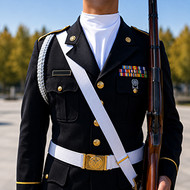
A military bib scarf is a formal neckwear accessory worn with certain military dress uniforms, ceremonial uniforms, color guard attire, and cadet uniforms. Unlike a standard necktie, a bib scarf is designed to create a clean, uniform appearance across all members of a formation.
The scarf typically sits beneath the uniform collar and presents a symmetrical appearance from the front. Depending on the uniform requirements, it may feature a smooth finish, pleated construction, or military-specification design. Because of its consistent appearance, the military bib scarf remains a common component of ceremonial and parade uniforms where uniformity is closely inspected.
Many organizations also use bib scarves because they are easier to wear consistently than traditional neckwear, particularly when large groups must maintain identical appearance standards.
The History of the Bib Scarf in Military Dress Uniforms
Origins in Ceremonial and Parade Traditions
The roots of the military bib scarf can be traced to military dress traditions that emphasized discipline, appearance, and visual uniformity. Ceremonial units historically used neckwear that helped create a formal and standardized appearance during parades, inspections, and public events.
As military ceremonies became more structured, uniform accessories evolved to support consistency across formations. Neckwear that could be worn quickly while maintaining a professional appearance became increasingly valuable for units preparing large numbers of personnel for ceremonial duties.
How the Bib Scarf Evolved Across Military Branches
Over time, different military branches and cadet organizations adopted variations of bib scarves to align with their uniform requirements. Materials improved, fastening systems became more practical, and manufacturers developed styles designed specifically for ceremonial applications.
Today, military ascots and bib scarves are available in multiple configurations, allowing organizations to select options that match both uniform regulations and operational needs.
What a Military Bib Scarf Is Used For Today
Ceremonial Parades and Honor Guard Appearances
One of the most common uses of a military bib scarf remains ceremonial service. Honor guards, ceremonial units, and parade formations frequently wear bib scarves because they contribute to a polished and consistent appearance.
In highly visible events, even small uniform details receive attention. Bib scarves help maintain the level of professionalism expected during military ceremonies, memorial services, and public commemorations.
Color Guard and Drill Team Uniforms
Color guards and drill teams often rely on bib scarves to create a uniform appearance across the entire formation. During competitive events and public presentations, consistency in uniform accessories contributes to the overall visual impact of the team.
Because these units frequently perform under close observation, properly fitted bib scarves help maintain a professional standard throughout the event.
JROTC and Cadet Dress Uniforms
Many JROTC and cadet programs incorporate the military bib scarf into dress uniform configurations. For cadets, learning how to wear uniform components correctly is part of developing attention to detail and understanding military customs.
These programs often purchase bib scarves in larger quantities to ensure consistency across the entire unit.
Types of Military Bib Scarves
Smooth Satin Bib Scarves
Smooth satin bib scarves are popular because they provide a clean and refined appearance. Many ceremonial units prefer this style when the goal is to achieve a polished dress uniform presentation.
Units seeking a traditional formal appearance often select smooth satin bib scarves that complement ceremonial uniforms without adding unnecessary bulk.
Pleated Bib Scarves
Pleated bib scarves feature decorative folds that create additional texture and visual distinction. These scarves are commonly used in formal ceremonial settings where traditional military dress standards are emphasized.
Organizations looking for a more formal presentation frequently choose pleated bib scarves for honor guards and ceremonial teams.
Military Specification Bib Scarves
Some units require products manufactured to established military standards. In these situations, bib scarves with military specifications become particularly important.
Military-specification scarves are designed to meet specific uniform requirements and are commonly selected by organizations that must adhere closely to official appearance standards. Many supply officers specifically seek military specifications bib scarves when purchasing uniform components for larger programs.
Winter and Fleece-Lined Bib Scarves
Cold-weather operations create additional challenges for ceremonial units. Standard dress uniform accessories may not provide adequate warmth during outdoor events held in colder climates.
For these situations, many organizations choose winter-weight fleece bib scarves that provide additional insulation while maintaining a professional appearance.
Materials and Construction: What to Look for in a Quality Bib Scarf
Fabric Types and Finish
The material used in a military bib scarf directly affects its appearance, comfort, and durability. Smooth satin fabrics provide a formal appearance, while heavier materials may offer improved durability or cold-weather performance.
The finish should maintain its appearance after repeated use and cleaning. High-quality materials help ensure that the scarf continues to meet uniform standards throughout its service life.
Fit, Fastening, and Adjustability
A bib scarf should remain secure throughout ceremonies and inspections. Adjustable fastening systems help accommodate different users while maintaining a consistent appearance across the formation.
Units purchasing scarves in bulk often benefit from accessories such as bib scarf extenders, which can improve fit and provide additional flexibility when outfitting personnel with varying neck sizes.
Military Bib Scarf Regulations by Branch
Army and JROTC Bib Scarf Standards
Army ceremonial units and JROTC programs may have specific requirements regarding authorized uniform accessories. Supply personnel should always consult current uniform guidance before making purchases.
When replacement items are needed, selecting products that align with established specifications helps maintain consistency throughout the unit.
Air Force and AFJROTC Requirements
AFJROTC and Air Force-affiliated programs emphasize uniformity and proper wear of authorized uniform components. The military bib scarf selected for these programs should match the applicable dress uniform standards.
Marine Corps and Navy Ceremonial Use
Marine Corps and Navy ceremonial organizations often place significant emphasis on uniform presentation. Bib scarves used in these environments are selected to support the professional appearance expected during formal events.
How to Wear a Military Bib Scarf Correctly
A military bib scarf should be worn according to the uniform regulations applicable to the organization. The scarf should sit neatly beneath the collar, remain centered, and present a symmetrical appearance when viewed from the front.
Improper placement can create inconsistencies within the formation, particularly during inspections and ceremonial events where uniform appearance is closely evaluated. Taking the time to properly adjust the scarf helps maintain professional standards.
Caring for and Maintaining Your Bib Scarf
Washing and Pressing Without Damaging the Fabric
Proper maintenance helps preserve the appearance and lifespan of a bib scarf. Care instructions vary based on material type, so users should follow manufacturer recommendations whenever possible.
Excessive heat or improper pressing techniques can damage delicate fabrics and affect the appearance of pleated designs.
Storage Tips for Long-Term Use
When not in use, bib scarves should be stored in a clean, dry environment. Folding or storing them improperly can create unwanted creases that may be difficult to remove before inspections or ceremonies.
Protective storage practices help maintain a professional appearance and reduce replacement costs over time.
How to Choose the Right Bib Scarf for Your Unit
Matching Scarf Style to Uniform Type
The best military bib scarf is one that aligns with the uniform being worn. Ceremonial units may prefer pleated or satin styles, while organizations operating in colder climates may require fleece-lined options.
Understanding the purpose of the uniform helps simplify the selection process and ensures consistency throughout the organization.
Sizing and Quantity Considerations for Units
When purchasing a large unit, consistency should remain a priority. Selecting the same style, material, and finish for all members helps maintain a professional appearance during ceremonies and inspections.
Supply officers should also account for future replacements and growth when determining order quantities. Maintaining a small inventory of matching bib scarves can simplify future uniform management.
Conclusion
The military bib scarf remains an important component of military, ceremonial, and cadet uniforms because it supports the consistency, professionalism, and tradition expected in formal settings.
While the design has evolved, its purpose remains largely unchanged: helping units present a uniform appearance during ceremonies, inspections, honor guard duties, and public events.
Whether your organization requires military-specification scarves, pleated styles, smooth satin options, or cold-weather alternatives, selecting the right bib scarf helps maintain uniform standards and ensures personnel are properly equipped for their duties.
Reviewing available military uniform scarves and accessories before purchasing can help identify the best option for your unit's specific requirements.
Frequently Asked Questions
What is the difference between a pleated and a smooth bib scarf?
A pleated bib scarf features decorative folds that create a more formal and gathered appearance, while a smooth bib scarf has a flat, satin-like finish that provides a clean and streamlined look.
Are bib scarves required for JROTC dress uniforms?
Requirements vary by program and uniform configuration. Some JROTC units include bib scarves as part of their dress uniform standards, while others may not require them.
Can bib scarves be worn in cold weather conditions?
Yes. Winter-weight and fleece-lined bib scarves are available for organizations that conduct ceremonies and outdoor events in colder climates.
How do I know which bib scarf meets military specifications?
Review the applicable uniform guidance for your organization and select products specifically identified as meeting military specification requirements when required.