 Shop Military & Cadets
 Shop First responders

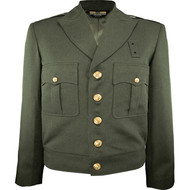
Honor Guard Ike (Eisenhower) Jacket Regulations: A Complete Guide
Oct 19th 2026
Every detail matters when you step forward as part of an Honor Guard. The Ike jacket is not simply another uniform piece. Its fit, insignia, ribbons, and overall presentation contribute to the disciplined appearance expected during ceremonies, funerals, official events, and other ceremonial duties.
Preparing an Honor Guard Ike jacket correctly means knowing which configuration applies, which components are authorized, and how to position each item. Command and unit guidance can also determine when the jacket may be worn and which accouterments are appropriate for the assignment.
This guide is designed for U.S. Army honor guard Soldiers, ceremonial unit members, and unit leaders. The checklist provides a step-by-step review of authorization, uniform class, components, insignia, and event requirements before duty.
The Story Behind the Ike Jacket
The Ike jacket started out as the Wool Field Jacket, M-1944. The Army made it during World War II, and it became standard issue in late 1944. General Dwight D. Eisenhower liked short jackets that ended at the waist, like the ones British soldiers wore.
In 1943, he asked General George C. Marshall to bring in a similar jacket for American troops. Soldiers soon began calling it the "Eisenhower jacket," and later just the "Ike jacket," because of his connection to it. The nickname became more popular than the official name.
Today, the jacket is an optional purchase that Soldiers can wear with the Class B Army Green Service Uniform, but not with the blue Army Service Uniform.
Honor Guard Ike Jacket Authorization
For Army honor guard duties, an Ike jacket must be an authorized Army uniform item and worn in accordance with current Army uniform regulations.
- Authorized AGSU Ike jacket: The Army's Ike jacket is an optional AGSU item governed by AR 670-1, DA PAM 670-1, and applicable Army directives. A generic Eisenhower-style jacket from a workwear or civilian brand is not automatically an authorized Army uniform item.
- Unit and command policy: An Army honor guard's SOP must follow Army policy. Your unit or command may also prescribe additional requirements for specific duties, formations, or ceremonies.
- Check current guidance: Uniform rules can change. Before wearing an Ike jacket for an honor guard detail, check the latest Army guidance and make sure your unit authorizes it for that event.
Army rules vs. Other Honor Guards
The rules in this guide apply to U.S. Army Soldiers. Police, fire, JROTC, veterans', federal-agency, and other civilian honor guards may follow their own department, agency, or program uniform policy.
Do not assume that an Army Ike jacket rule applies to another organization simply because the jacket looks similar. Confirm the applicable policy with your commander, chief, senior enlisted leader, uniform officer, or program director before ordering.
Ike Jacket Wear Regulations
The Ike jacket must be an approved Army-pattern item. When worn, it must be properly fitted and fastened according to Army requirements. DA PAM 670-1 requires the Ike jacket to be fastened to at least the second button down from the top.
Glendale's AGSU Male Eisenhower Jacket meets PD S-06-21 specifications and features adjustable waist tabs, adjustable cuffs, and a fully lined interior.
Ike Jacket Regulations for Ceremonies and Formations
The Ike jacket is not automatically appropriate for every ceremony or formation. The event's prescribed uniform takes priority.
- Ceremonies: For events such as change-of-command or retirement ceremonies, follow the uniform directed by the commander or event SOP.
- Formations: Do not wear the Ike jacket in formations unless the commander authorizes it. If it is authorized, the entire element should follow the same uniform guidance for a consistent appearance.
- Funerals and memorials: Follow the honor guard detail's SOP and the sponsoring command's instructions. Verify requirements for gloves, headgear, and other accessories before the service.
The same principle applies to parades, reviews, inspections, and other formal events: do not assume that an Ike jacket is authorized simply because it is an Army uniform item.
Ike Jacket Insignia Regulations
The Ike jacket has specific insignia requirements. The details below reflect current Army guidance.
Rank Insignia
Rank placement on the Ike jacket depends on your grade, whether you are an enlisted Soldier (such as a sergeant) or an officer, and the current Army configuration authorized for your uniform.
Do not rely on photos from another unit or older uniform guides. Check the applicable Army illustration and current guidance for your rank before attaching insignia.
Army Directive 2025-18 also authorized Soldiers to embroider their current rank on the AGSU service coat and Ike jacket.
If your rank insignia is worn or damaged, replace it with clean military rank insignia.
Ribbons
The Ike jacket permits no more than six ribbons in two rows. Wear authorized ribbons in the prescribed order of precedence.
Use clean, serviceable ribbons and keep the rows properly aligned. Do not add a seventh ribbon simply because you have more awards.
Badges
Wear combat and special skill badges and tabs on the Ike jacket the same way as the AGSU Class A, subject to specific badge-placement rules.
Wear only one identification badge per side or pocket of the Ike jacket. Do not wear unit awards or foreign badges on the Ike jacket.
Do not assume that a badge authorized on another Army uniform is automatically authorized on the Ike jacket. Check the current Army guidance for the specific badge or tab.
Nameplate
The Ike jacket requires a nameplate. Army Directive 2025-18 requires a laminated plastic nameplate that is dark brown with taupe lettering, and only the Soldier's last name is authorized.
Placement differs for male and female Soldiers, so use the current Army illustration rather than estimating the position from a photograph.
If your nameplate is damaged, worn, or incorrectly configured, custom nameplates can help you replace it with the correct style.
Ike Jacket Regulation Requirements by Uniform Class
Understanding the uniform class makes the Ike jacket rules easier to follow.
AGSU Class A Requirements
The Class A AGSU uses the service coat with the appropriate shirt, neckwear, pants or skirt, and authorized headgear. Wear it when the event or command calls for the Class A uniform.
The Ike jacket is not interchangeable with the Class A coat.
AGSU Class B Requirements
Wear the Class B AGSU without the service coat. Soldiers may wear authorized insignia and accouterments with the Class B when their commander permits it.
The Army describes the AGSU tropical dress variation as Class B with ribbons and an equivalent Class A or dress variation for hot-weather wear. The Ike jacket is a variation of the Class B AGSU, but it is not interchangeable with the Class A coat.
Ike Jacket Regulation Compliance Checklist
Run this check before any duty day, inspection, ceremony, or formation.
- Current regulation: Confirm you are using the latest AR 670-1, DA PAM 670-1, Army directives, and Army uniform guidance.
- Recent updates: Check for current Army uniform changes and command guidance before relying on older photos or previous versions of the regulations.
- Authorized use: Make sure the Ike jacket is authorized for the occasion.
- Uniform class: Confirm whether the event calls for Class A, Class B, or another authorized variation.
- Specifications: Verify that the jacket meets the applicable Army specifications.
- Rank: Check rank placement against the current guidance for your grade.
- Ribbons: Wear no more than six ribbons in two rows and keep them in the prescribed order of precedence.
- Badges: Confirm combat and special skill badges and tabs follow the applicable AGSU Class A placement rules. Wear no more than one identification badge per side or pocket, and do not add unit awards or foreign badges.
- Nameplate: Check the current nameplate format, placement, and alignment.
- Event rules: Review any ceremony, inspection, or formation instructions.
- Command approval: Confirm unit or commander authorization when required.
An Ike jacket can look right in the mirror and still miss the standard because of a seventh ribbon, an unauthorized badge, an incorrectly positioned nameplate, or the wrong event. Treat the current Army regulation and your unit guidance as the final authority, not a photo from another unit's social media page.
Need to complete your military uniform setup? Explore Glendale Parade Store's selection of Ike jackets and uniform accessories to help prepare for inspections, ceremonies, formations, and other authorized uniform occasions.
FAQs
Are there specific care or maintenance requirements for an Ike jacket?
Follow the jacket's care label and any applicable Army care instructions. Remove removable insignia before cleaning when appropriate, and store the jacket on a suitable hanger to help maintain its shape.
What should be checked before ordering multiple Ike jackets for an honor guard?
First, confirm that the Ike jacket is authorized for your planned duties. Then collect each member's size information and check whether your unit or organization requires a particular specification or purchasing process. For group orders, also check the seller's current shipping, exchange, and return policies before ordering.
Are men's and women's Ike jackets configured differently?
Fit and sizing can differ between men's and women's cuts. Use the size chart for the specific jacket you are ordering, and check current Army guidance for the configuration and insignia rules that apply to you.
What measurements do you need when ordering an Ike jacket?
Take the measurements required by the seller's size chart, such as chest/bust, waist, and sleeve length. Note your height if the jacket is offered in different length categories. Follow the seller's measurement instructions and compare your measurements with the chart before ordering.