
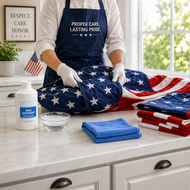
How to Properly Clean the American Flag: A Step-by-Step Guide for Every Flag Type
Jun 8th 2026
The flag hanging outside our house, flying with glory, goes through a lot more than dust. It fights rain, pollen, smoke, bird droppings, mildew, and strong sunlight, all of which leave their mark and affect its durability.
Many people wonder how to clean an American flag without damaging the fabric or disrespecting what it represents. Unfortunately, the wrong cleaning method can fade colors, weaken stitching, and ruin older flags completely.
Proper care matters. The U.S. Flag Code emphasizes treating the flag with respect, and that includes keeping it in good condition rather than allowing dirt and damage to build up. Whether you are caring for a porch flag, a memorial display, or an older family flag stored away for years, the right cleaning approach depends on the material and condition of the flag.
This guide explains how to properly clean an American flag, including fabric identification, hand washing, machine washing, stain removal, drying methods, and when a flag should be respectfully retired instead of cleaned.
Why Cleaning Your American Flag Matters
Before learning how to clean an American flag, it is important to understand why cleaning matters in the first place. A clean flag not only looks better, but it also lasts longer. Dirt, moisture, and environmental buildup slowly weaken fibers and stitching, especially on outdoor flags exposed to daily weather conditions.
Common contaminants include dust and pollen, tree sap, bird droppings, smoke residue, mold and mildew, and salt air in coastal areas. When these materials sit on the fabric too long, they accelerate color fading and fabric breakdown. A flag that is cleaned properly and regularly often maintains its appearance far longer than one left untreated.
Identify Your Flag’s Material Before Cleaning
To know how to clean an American flag, it is important to identify the fabric before washing any flag. This step matters because different materials respond differently to water, detergent, and heat.
Nylon Flags: Nylon is the most common material used for residential American flags. It is lightweight, dries quickly, and generally handles machine washing on a gentle cycle well.
Signs your flag is nylon:
- Smooth texture
- Lightweight feel
- Slight sheen in sunlight
Polyester Flags: Polyester flags are heavier and designed for long-term outdoor use, especially in windy climates. They are more durable than nylon and resistant to fading, but sensitive to high heat.
Signs your flag is polyester:
- Thicker fabric
- Heavier weight
- More rugged stitching
If you are confused about which is the best flag fabric as per your needs, here’s a quick comparison of Nylon vs. Polyester American flag.
Cotton Flags: Cotton flags are more traditional and delicate, making them common for indoor displays, ceremonies, parades, and commemorative use.
Signs your flag is cotton:
- Softer texture
- Matte appearance
- Wrinkles more easily
If there is no fabric label, treat the flag as cotton to avoid accidental damage.
If you want to understand how to clean an old American flag, historical reproductions, or flags with sentimental value, the answer is simple: they should always be hand-washed carefully or cleaned by a professional to avoid damaging fragile fibers and stitching.
The quality and durability of the fabric play a major role in how well an American flag holds up over time and how easy it is to clean and maintain. Before purchasing a new flag, read this practical guide to choosing a durable outdoor American flag for different weather conditions and display needs.
How to Hand Wash an American Flag
Hand washing is the first and safest method of learning how to clean an American flag for nearly every flag type, especially older or sentimental flags.
Step 1: Prepare the Water:
Fill a basin or bathtub with cool water and mix in a small amount of mild detergent before placing the flag inside. Avoid pouring detergent directly onto the fabric.
Step 2: Soak the Flag
Lay the flag flat in the water and allow it to soak for several minutes to loosen dirt and debris.
Step 3: Gently Clean the Fabric
Use your hands or a soft cloth to move the water gently through the fabric. Focus on visibly dirty areas without scrubbing aggressively.
Never twist, wring, or bunch the flag tightly. This can damage stitching and distort the shape.
Step 4: Rinse Thoroughly
Drain the soapy water and rinse the flag several times with clean, cool water until no detergent remains.
Step 5: Remove Excess Water
Lay the flag flat between clean towels and press lightly to absorb moisture. Do not wring the fabric.
Hand washing carefully with precautions is also the safest approach for anyone researching how to clean an old American flag without weakening older fibers.
How to Machine Wash a Nylon or Polyester Flag
Machine washing is suitable for most nylon and polyester flags if it is done carefully on a gentle cycle. When learning how to clean an American flag, it is important to use the correct machine-wash settings for durable synthetic flags, which include cold water, a gentle or delicate cycle, and mild detergent only. Placing the flag inside a mesh laundry bag helps prevent snagging and reduces stress on the stitching.
You should avoid using bleach or fabric softener, as well as hot water and heavy-duty wash cycles. Even if the flag is labeled as machine washable, you should still avoid machine drying, because heat is one of the fastest ways to damage synthetic fibers and fade the colors of the flag.
Removing Tough Stains From an American Flag
Outdoor flags often develop stains that require extra care. If you are wondering how to clean an American flag with stains, the key is to treat the stain carefully without damaging the fabric underneath.
Mildew and Mold
Mix equal parts white vinegar with cool water and soak the flag in the solution for 30 minutes, and dab the affected area on the nylon flag gently with a cloth. Allow the flag to air dry in indirect sunlight before checking whether the stain remains.
Bird Droppings
Rinse the area first with cool water to soften buildup. Then use mild detergent and gentle spot cleaning to remove the residue and stain.
Smoke and Soot
Soak the flag in cool water mixed with mild detergent for several hours if needed. Rinse multiple times in cold water to remove lingering residue.
If the stains remain deeply embedded after careful cleaning, the flag may no longer be suitable for display. At that point, respectful retirement is often the better option.
How to Dry an American Flag Properly
Drying is the crucial step in knowing how to clean an American flag because drying is where many flags become damaged. Excessive heat can shrink cotton and weaken synthetic fibers.
The safest method is air drying.
You can:
- Lay the flag flat on clean towels
- Hang it in a shaded outdoor area
- Dry it indoors near moving air
Avoid direct intense sunlight for long periods during drying, especially for older flags that may already be faded. If ironing is necessary, use low heat only and follow the fabric label instructions carefully.
The clean American flag should be completely dry before folding or storage. Even small amounts of trapped moisture can lead to mildew over time. For long-term storage, place the flag in a breathable cotton container or a properly clean, dry storage box.
When to Stop Cleaning and Retire the Flag
Not every flag can or should be restored. A flag is generally considered unserviceable when it has severe fraying, torn sections, holes, permanent staining, significant fading, or broken stitching.
Even after learning how to properly clean an American flag and taking timely care, outdoor flags have a limited lifespan. A flag flown daily in harsh weather may only remain serviceable for a few months before replacement becomes necessary.
Once a flag is no longer fit for display, it is recommended to retire the flag in a dignified and respectful manner, preferably through a formal ceremony. Many units and families choose to hold these ceremonies around Flag Day on June 14, making it a meaningful time to replace worn flags with new ones.
Explore Glendale Parade Store’s American flag collection for high-quality flags designed for residential, ceremonial, and outdoor display.
Equipping Yourself With a Quality Replacement Flag
Learning how to clean an American flag properly helps extend its life, preserve its appearance, and honor what it represents. The most important rule is simple: identify the material first, clean gently, air dry completely, and retire the flag respectfully when cleaning is no longer enough.
When it is time for a replacement, choosing a durable, well-made flag matters just as much as maintaining the old one.
For long-term outdoor display, explore durable outdoor American flags designed to withstand changing weather conditions while maintaining their color, strength, and appearance. A high-quality flag not only lasts longer but also preserves the pride and dignity it represents.
FAQ
Can you put an American flag in the washing machine?
Yes, most nylon and polyester American flags can be machine-washed using cold water on a gentle cycle. Cotton flags and older commemorative flags should usually be hand-washed instead. Flags should be air-dried naturally and not placed in a machine dryer, as direct heat can damage the fabric and cause colors to fade.
How do you clean a flag without taking it down from the pole?
You can clean a flag while it’s still hanging by gently treating only the dirty spots. If it’s mounted too high, lower it just enough so you can reach the soiled areas comfortably. Using a soft-bristled brush or a clean sponge, apply a mix of mild liquid laundry detergent and cool water, and lightly scrub to lift away dirt and stains.
Can you bleach an American flag to remove stains?
No. Bleach can weaken fibers, damage stitching, and fade the colors of the flag. Mild detergent in cold water, with handwashing, is the safest option for routine cleaning.
How do you clean an old cotton American flag without ruining it?
Old cotton flags should always be hand-washed in cool water with mild detergent or recommended for professional cleaning. Avoid scrubbing, wringing, or exposing the fabric to high heat during drying.
How do you get mildew or mold out of an American flag?
An equal parts mixture of white vinegar and cool water can help safely remove mildew. Soak the flag in the mixture for 30 mins, then gently dab the affected area and allow the flag to air dry completely before storing or displaying it again.
How often should you wash your American flag?
Outdoor flags should be inspected regularly and cleaned whenever visible dirt, pollen, or stains begin building up. It is recommended to clean your flag at least once a year to preserve its color and fabric.
Is dry cleaning safe for an American flag?
Dry cleaning may be suitable for some older or delicate cotton flags, and is often the best choice for delicate, vintage, or heavily soiled flags, but always confirm that the cleaner has experience handling flags or historical fabrics before proceeding.