 Shop Military & Cadets
 Shop First responders
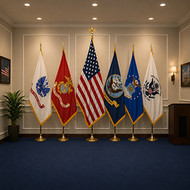
How to Display Multiple Flags in One Room Without Breaking Protocol
Jul 10th 2026
Many organizations, schools, military units, veterans groups, and public institutions need to display multiple flags indoors but are often unsure how to do so correctly. Questions about flag placement, military branch flag order, state flag positioning, and indoor display requirements can create confusion, especially when several flags share the same room.
Understanding how do you display multiple flags properly helps ensure respect for national symbols while maintaining compliance with established flag etiquette and recognized protocols. Whether you are arranging a government office, JROTC classroom, veterans hall, church sanctuary, or corporate lobby, following the correct order and placement prevents common mistakes.
This guide explains U.S. Flag Code fundamentals on how do you display multiple flags, the proper order of precedence for multiple flag displays, military branch flag arrangements, and practical setup recommendations for different types of indoor spaces.
Why Indoor Flag Display Protocol Still Matters
Indoor flag displays serve a ceremonial and symbolic purpose beyond decoration. In government facilities, schools, military installations, veterans organizations, and civic institutions, flag arrangements communicate respect for national authority, military service, state identity, and organizational heritage.
A properly arranged multiple flag display reflects attention to established traditions and demonstrates respect for the significance each flag represents. For military organizations and veterans groups, correct display procedures help preserve customs that have been followed for generations.
While portions of the U.S. Flag Code are advisory rather than legally enforceable for most civilians, they remain the widely accepted standard for flag presentation throughout the United States.
US Flag Code Basics: What You Need to Know Before Displaying Multiple Flags
Before knowing how do you display multiple flags indoors, it is important to understand several foundational principles found within the U.S. Flag Code.
The US Flag's Position of Honor
The American flag always occupies the position of honor when displayed with other flags. When displayed in a row of flagpoles or flag stands, the U.S. flag should be positioned at its own right, which appears on the observer's left when facing the display. This placement recognizes the flag's status as the nation's primary symbol.
The position of honor remains the guiding principle regardless of whether the display includes state flags, military branch flags, organizational flags, or ceremonial banners.
What the Flag Code Says About Multi-Flag Displays
The U.S. Flag Code establishes that no other flag should be placed above the American flag within the United States. When displayed alongside other flags on separate staffs, the American flag should be at the same height or higher, depending on the display configuration and applicable protocols.
For indoor displays using matching flag stands, the emphasis is generally placed on proper order and position rather than varying pole heights.
Understanding these principles is essential when creating a multiple flag display protocol that respects both national standards and organizational traditions.
Common Flag Code Violations to Avoid Indoors
Several mistakes appear frequently in indoor flag arrangements:
- Placing another flag in the position of honor
- Displaying military branch flags before the U.S. flag
- Arranging state flags ahead of the national flag
- Using uneven pole heights that create confusion about precedence
- Crowding flags too closely together
- Displaying worn, damaged, or faded flags
Avoiding these errors helps create a display that reflects professionalism and respect.
The Order of Precedence for Displaying Multiple Flags Indoors
The most common question surrounding a multiple flag display involves determining which flags should appear first.
US Flag First: Always the Position of Honor
The American flag occupies the highest position of precedence in indoor displays. Whether the display contains three flags or ten, the U.S. flag remains the focal point and should be placed in the position of honor according to established protocol.
State and Territorial Flags
State and territorial flags follow the U.S. flag. When multiple state flags are displayed together, they are generally arranged alphabetically unless a specific ceremonial requirement dictates otherwise.
For government buildings and public institutions, maintaining consistency in state flag placement helps prevent confusion and supports uniform presentation standards.
Military Branch Flags and Their Correct Order
Military service flags are displayed according to the Department of Defense order of precedence:
- United States Army
- United States Marine Corps
- United States Navy
- United States Air Force
- United States Space Force
- United States Coast Guard
This order reflects Department of Defense precedence rather than branch founding dates. Military branch flags never take precedence over the U.S. flag and are typically displayed after national and state flags when combined in a larger arrangement.
Organizational, Institutional, and Unit Flags
School flags, agency flags, corporate flags, veterans organization flags, ROTC guidons, and other institutional banners generally follow national, state, and military service flags.
The specific arrangement may vary depending on organizational traditions, but these flags should not be placed above the U.S. flag.
How to Display Multiple Flags in a Row
Many facilities use side-by-side floor stands or flagpole displays to present several flags together.
Odd vs. Even Numbers of Flags
With an odd number of flags, the display often appears more balanced visually because the center serves as a natural focal point.
When an even number of flags is used, careful spacing becomes more important to maintain symmetry while preserving the U.S. flag's position of honor. Regardless of the number used, protocol always takes priority over visual symmetry.
Facilities that regularly move flags for ceremonies, graduations, inspections, or public events often use professional flag carriers to protect both the flag and staff during transport and presentation.
Centering and Spacing Guidelines
Each flag should have sufficient space to hang naturally without overlapping neighboring flags. Crowded displays can diminish visibility and create an unprofessional appearance. Adequate spacing allows each flag's design and symbolism to be properly recognized.
Height and Alignment Rules for Indoor Displays
For most indoor installations, flag staffs should be of similar height and appearance. Using properly sized indoor flag poles helps create a uniform presentation while ensuring the display meets ceremonial and institutional standards.
Matching indoor flagpoles, flag stands, bases, and decorative accessories create a uniform presentation while allowing the order of precedence to communicate hierarchy clearly.
Organizations seeking a professional display often use coordinated flag poles, flag stands, and decorative ornaments designed specifically for ceremonial environments.
How to Display Multiple Flags in a Single Room by Setting Type
Different facilities often require slightly different display arrangements.
Government Offices and Federal Buildings
Government facilities typically display the U.S. flag alongside state, territorial, agency, or departmental flags. Because these displays often appear in public-facing areas, strict adherence to recognized protocol helps maintain consistency and professionalism.
Schools, Classrooms, and JROTC Rooms
Educational institutions frequently display national, state, and organizational flags. JROTC programs may also include service branch flags, unit guidons, or ceremonial colors used during inspections and formal events. Proper arrangement reinforces respect for military customs and civic traditions.
Churches, Chapels, and Religious Spaces
Many churches and chapels display both religious and national flags. When displayed together, the American flag retains its recognized position of honor within the room while respecting the traditions of the religious institution.
Corporate Offices and Public Lobbies
Businesses commonly display the U.S. flag alongside state, corporate, or international flags. Careful attention to flag order creates a welcoming and professional environment while avoiding protocol mistakes that visitors may notice.
Military and Veterans Organization Halls
Veterans organizations, military museums, and service-related facilities often maintain the most complex displays.
These locations may include national flags, POW/MIA flags, military service flags, campaign flags, and organizational banners. Following the established multiple flag display protocol helps preserve the traditions these organizations exist to honor.
Organizations that maintain historical or memorial displays often protect retired ceremonial flags using flag display cases and protective covers, helping preserve important symbols of service and remembrance for future generations.
Displaying Military Branch Flags Together: What the Regulations Say
Military service flags require special consideration because many organizations display all branches together.
Order of Precedence (Ceremonial & Flags)
Current Department of Defense precedence places the branches in the following order:
- Army
- Marine Corps
- Navy
- Air Force
- Space Force
- Coast Guard
This arrangement should be used when displaying service flags together in military facilities, veterans halls, memorial spaces, schools, and public institutions.
Displaying the POW/MIA Flag Correctly
The POW/MIA flag holds a unique place in military and veterans communities. When displayed indoors with other flags, organizations should follow applicable federal guidance and institutional requirements regarding placement.
The flag serves as a reminder of service members who remain prisoners of war or missing in action and should be displayed respectfully.
Armed Forces Flag Sets for Institutional Use
Many schools, military organizations, veterans groups, and government facilities use complete Armed Forces flag sets to ensure consistent presentation.
Using matching flag dimensions, indoor poles, bases, and ceremonial flag ornaments creates a professional appearance while helping maintain proper order and visibility throughout the display.
For permanent installations, selecting quality indoor display equipment contributes to long-term durability and ceremonial presentation.
Conclusion
Knowing how do you display multiple flags correctly helps organizations honor military traditions, comply with recognized flag etiquette, and create professional indoor displays that reflect the significance of the flags being presented.
Whether arranging a government office, school, veterans hall, corporate lobby, or ceremonial space, the key principles remain consistent: place the U.S. flag in the position of honor, follow established precedence rules, and maintain a clean, balanced presentation.
For organizations building or updating an indoor flag display, high-quality American flags, military branch flags, flag poles, flag stands, and ceremonial display accessories help ensure both durability and proper presentation.
Glendale has supplied flags and ceremonial display products to military organizations, government agencies, schools, veterans groups, and civic institutions for decades, supporting the traditions these displays are designed to represent. Explore Glendale's collection of military, patriotic, and institutional flag display solutions.
Frequently Asked Questions
Which flag goes in the center when displaying multiple flags?
When multiple flags are displayed together, the national flag (such as the U.S. flag) must always hold the place of highest honor. In a grouped arrangement, it should be positioned in the center and raised higher than the other flags.
Can a state flag be displayed at the same height as the US flag indoors?
Yes. Indoor displays commonly use matching flag staffs of equal height. The determining factor is the U.S. flag's position of honor rather than staff height alone.
What is the correct order for military branch flags displayed together?
Military branch flags are arranged from the viewer’s left to right according to the Department of Defense’s official order of precedence. The proper order is as follows: Army, Marine Corps, Navy, Air Force, Space Force, and Coast Guard.
How many flags can you display in one room without violating protocol?
There is no specific limit. Proper flag etiquette depends on placement, order of precedence, spacing, and overall presentation rather than the total number of flags displayed.
Do the same flag display rules apply in schools and government buildings?
Yes, the core principles remain the same. The American flag retains the position of honor, and additional flags should follow the appropriate order of precedence for the institution's display requirements.