 Shop Military & Cadets
 Shop First responders
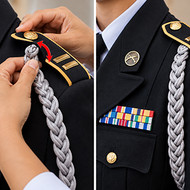
How to Properly Wear Military Shoulder Cords
Sep 28th 2026
A military shoulder cord is easy to put on incorrectly. The cord may be authorized, but the wrong attachment style, shoulder placement, or loose fit can leave a uniform looking untidy or fail to meet your service's uniform requirements.
The first step is to check your current uniform regulations, then choose a shoulder cord that matches your uniform's attachment style. If your shirt or jacket has a button-down epaulet, a cord with a button loop is generally the practical choice.
If the uniform has no epaulets, or the required placement calls for the cord to sit toward the outside of the shoulder, a pin-attached cord may be appropriate. This blog below explains how to select, attach, position, and secure a shoulder cord correctly.
What Are Military Shoulder Cords and When Are They Worn?
Military shoulder cords are braided uniform accessories used to identify specific qualifications, assignments, organizations, or distinctions. Shoulder cords evolved from functional battlefield gear into ceremonial symbols of unit identity, achievement, and rank. Today, their meaning and authorized use can vary depending on the military branch, unit, uniform, or cadet program.
Before putting one on, confirm why you are authorized to wear it and when it is permitted. A cord intended for a particular assignment should not automatically be treated as a permanent decoration.
Army guidance, for instance, distinguishes authorized shoulder cords from permanent awards and specifies when particular cords may be worn.
If you're unsure about the symbolic importance behind your cord, see Glendale's guide to what military shoulder cords mean before attaching it.
How to Properly Attach a Military Shoulder Cord
The right attachment method depends on both the shoulder cord and the uniform. Before attaching yours, check the applicable uniform regulations and determine whether your uniform has a button-down epaulet.
Do not tie the cord into a knot or create a custom attachment unless your uniform instructions specifically call for it.
For a Button-Loop Shoulder Cord
If your uniform has a button-down epaulet and the applicable regulations authorize a button-loop cord:
- Unbutton the epaulet on the authorized shoulder.
- Place the cord's loop around the epaulet button.
- Arrange the braid so it sits smoothly over the shoulder without twisting.
- Refasten the epaulet with the cord loop secured around the button.
- Check the finished uniform to make sure the cord sits neatly and does not pull on the fabric.
For a Pin-Attached Shoulder Cord
A pin attachment is useful for uniforms without an appropriate epaulet or when regulations call for the cord to be positioned toward the outside of the shoulder.
Carefully align the pin on top of the shoulder, just inside the outside edge where the sleeve begins. Push most of the pin through the uniform material and secure the backing firmly. Avoid placing the pin so close to the sleeve edge that the cord can easily shift or pull on the fabric.
The attachment should be secure without distorting the shoulder or making the cord sit at an unnatural angle.
Where and How Should a Military Shoulder Cord Sit on the Uniform?
A properly worn shoulder cord should follow the natural line of the shoulder and remain comfortably positioned when you move your arm. The exact shoulder and placement are determined by the applicable uniform regulations, so never assume that all military shoulder cords are worn on the same side.
Before an inspection or ceremony occasion, check that:
- The cord is on the authorized shoulder.
- The braid is not twisted or tangled.
- The attachment point is secure.
- The cord does not pull or bunch the uniform dress fabric.
- The hanging portion has enough room for normal arm movement.
- Any additional accessories are positioned according to the applicable regulations.
Try on the complete uniform rather than checking the cord separately. A cord can appear correctly positioned while the uniform is laid flat but shift once you stand, move, or raise your arm.
Military Shoulder Cord Colors and Their Meaning
Color can help identify the purpose of a shoulder cord, but color alone is not enough to determine its meaning. Different branches, units, military schools, and JROTC programs may assign their own meanings or authorization rules.
For that reason, don't purchase a cord simply because its color appears to match a particular branch or activity. Confirm the required color, braid pattern, and authorization with your unit.
For a closer look at color symbolism, Glendale's guide to military shoulder cord colors and their meanings can help you understand the distinctions.
Common Mistakes When Wearing Military Shoulder Cords
Avoid these mistakes before wearing your uniform:
- Assuming every cord goes on the left shoulder: placement varies by regulation.
- Wearing an unauthorized cord: earning or purchasing a cord does not automatically make it authorized for every uniform.
- Using the wrong attachment method: the cord should be designed for the uniform you're wearing.
- Allowing the braid to twist: straighten the cord before inspection or formal wear.
- Confusing a shoulder cord with an aiguillette: these are related but distinct uniform items. Glendale explains the difference between the shoulder cord and aiguillette.
How to Choose the Right Military Shoulder Cord
Choose a shoulder cord based on authorization first, then construction and attachment style. Verify the required color and design, check whether your uniform uses a shoulder-loop button or another attachment method, and make sure the cord is specifically appropriate for the event or duty.
If you're unsure, always follow your unit's official uniform guidance rather than general online recommendations.
Conclusion
Wearing a military shoulder cord correctly comes down to more than placing a braid over your shoulder. Confirm that the cord is authorized, follow your branch or unit's placement rules, use the correct attachment method, and check that it sits neatly before wearing the uniform.
If you're replacing a worn cord or preparing a uniform, Glendale Parade Store provides military shoulder cords in styles designed for different uniform applications. Start with our shoulder cord selection to find a cord that fits your uniform requirements and helps you present a clean, professional appearance.
Frequently Asked Questions
Can You Wear More Than One Military Shoulder Cord?
Not automatically. The number of cords permitted depends on the applicable branch, uniform, unit, and event regulations. Check your current uniform guidance before wearing multiple cords.
Do Military Shoulder Cords Worn on the Right or Left Shoulder?
There is no universal answer for every military uniform and organization. The military shoulder cords worn on the right shoulder or left shoulder depend on the award, uniform, type of cord, and specific branch of service regulation.
How Do You Attach a Military Shoulder Cord to a Uniform?
For a cord designed for a shoulder loop, it generally passes under the arm and over the shoulder, then secures to the shoulder-loop button. Always follow the instructions for your specific cord and uniform.
What Do Different Military Shoulder Cord Colors Mean?
Colors can represent different qualifications, assignments, organizations, or distinctions. Their meaning varies by branch and unit, so color should not be interpreted without checking the applicable regulations.
Are Shoulder Cords and Aiguillettes the Same Thing?
No. Although both are decorative cord-like uniform accessories, they can have different designs, purposes, and wear regulations. Check the specific item and applicable uniform guidance before treating them as interchangeable.