 Shop Military & Cadets
 Shop First responders
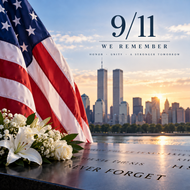
Patriot Day: Remembering September 11 on Its 25th Anniversary of Remembrance
Sep 8th 2026
Millions of Americans pause on September 11th each year, yet many couldn't say exactly why the date carries the weight it does. Patriot Day was built for that pause, a fixed point on the calendar meant to hold the country's attention, if only briefly, on what happened and who was lost.
In 2026, that pause carries extra weight. September 11th marks twenty-five years since the attacks that killed nearly 3,000 people and reshaped American life. This article covers what Patriot Day is, why September 11th still matters, and how to mark the day with purpose in 2026.
What Is Patriot Day?
Patriot Day is observed annually on September 11th to remember the men, women, and children who died as a result of the September 11 attacks, the 2001 terrorist attacks that killed 2,977 people. Congress created the observance through Public Law 107-89, a joint resolution signed into law on December 18, 2001, that added a formal designation to Title 36 of the United States Code.
Patriot Day is not a federal holiday, so it does not generally result in federal government, school, or business closures. Instead, the law asks the President to issue an annual proclamation encouraging Americans to display the flag at half-staff and observe a moment of silence.
It is also worth distinguishing Patriot Day from the similarly named Patriots’ Day, observed each April in Massachusetts and Maine to commemorate the opening battles of the American Revolutionary War. The two are legally distinct observances, fall on different dates, and commemorate entirely different events.
Why Is September 11th Remembered?
September 11 is remembered because of what happened that morning and, just as importantly, because of the people who were affected by it. Understanding both the events and the lives impacted is essential to observing Patriot Day with the seriousness it deserves.
The September 11th, 2001 Attacks
On the morning of September 11, 2001, 19 hijackers associated with al-Qaeda took control of four commercial airplanes in a coordinated terrorist operation. American Airlines Flight 11 struck the North Tower, while United Airlines Flight 175 struck the South Tower of the World Trade Center in New York City, causing the Twin Towers to collapse.
American Airlines Flight 77 struck the Pentagon in Arlington, Virginia. The fourth, United Airlines Flight 93, crashed into a field near Shanksville, Pennsylvania, after passengers and crew members confronted the hijackers.
The attacks killed 2,977 people, including those at the World Trade Center, the Pentagon, and aboard Flight 93. They remain the deadliest terrorist attacks in U.S. history, and their consequences continue to shape national security policy, air travel, and public memory a quarter century later.
Remembering the People
Behind every statistic from September 11th is a person with a name, a family, and a story. The victims included office workers, first responders, airline crew members, and visitors who had no reason to expect the day would be their last. Their families have carried that loss for twenty-five years.
First responders hold a particular place in the story of September 11th. Hundreds of firefighters, police officers, and emergency medical personnel ran toward danger that morning, and many were killed. In the years since, many responders, recovery workers, survivors, and others affected by the attacks have continued to face serious health consequences associated with exposure at the attack sites. For displays honoring first responders, Thin Line Flags can also provide a visual way to express support and remembrance.
Patriot Day provides an opportunity to remember those who died in the attacks and to recognize the ongoing sacrifices of those affected in the years that followed. It is also a time to honor the courage of first responders and the continued efforts of survivors, families, recovery workers, and communities whose lives were changed by September 11th.
What Is the 25th Anniversary of 9/11?
September 11, 2026, marks twenty-five years since the September 11, 2001, attacks. The milestone gives the country a moment to reflect not just on what happened, but on how the attacks have been remembered, taught, and honored in the decades since.
A 25th anniversary does not change what Patriot Day is or how it was established. The observance remains the same one created by Public Law 107-89 in 2001. What changes is the visibility of the commemorations, as memorial institutions, schools, and communities mark the milestone with expanded programming and renewed efforts to preserve firsthand accounts and educate future generations.
For younger generations born after 2001, the 25th anniversary carries added significance. For many students, 9/11 is now a historical event rather than a lived memory, making accurate and respectful education about the attacks and their lasting impact more important than ever.
How Is Patriot Day Observed?
Patriot Day is observed through quiet, personal gestures as well as formal commemorations. Common observances include moments of silence, memorial ceremonies, and the display of U.S. flags at half-staff. The 9/11 Memorial & Museum holds an annual commemoration at the World Trade Center site, while ceremonies and tributes also take place at the Pentagon and Flight 93 National Memorial. Many schools use the day for age-appropriate lessons about the attacks and their aftermath.
Communities across the country hold their own remembrance gatherings, from local firehouse ceremonies to church services and civic events. Some Americans choose to visit a memorial in person, while others mark the day by learning about individual victims and survivors or spending time with family reflecting on the significance of the date. Patriot Day is a federal observance rather than a federal holiday, so it generally does not involve nationwide school or workplace closures.
Patriot Day vs. the National Day of Service and Remembrance
Patriot Day is observed on September 11 to remember those who lost their lives in the September 11 attacks. The National Day of Service and Remembrance was established through federal legislation in 2009 and encourages Americans to honor those lost through volunteer service and community involvement.
|
Observance |
Main Purpose |
|
Patriot Day |
Remember those who died in the September 11th attacks |
|
National Day of Service and Remembrance |
Encourage service and community involvement in remembrance |
The two observances are complementary rather than competing. Americans may observe both by remembering those who were lost while also participating in acts of service, charity, or community support in honor of the day.
How to Honor Patriot Day in 2026
Honoring Patriot Day does not require a grand gesture. What matters most is taking the day seriously and choosing an action that feels meaningful, whether that is a quiet moment of reflection or an afternoon spent giving back to your community.
Pause for Remembrance
Set aside a few minutes on September 11th for quiet reflection. Many Americans observe a moment of silence at 8:46 a.m. Eastern, the approximate time American Airlines Flight 11 struck the World Trade Center. It offers an opportunity to pause together and remember those affected by the attacks.
Learn the Stories
Take time to learn about individual victims, survivors, first responders, or the passengers and crew aboard Flight 93 who fought back. Reading personal stories rather than focusing only on statistics keeps the human impact of September 11th at the center of remembrance.
Visit a Memorial
The National September 11th Memorial & Museum in New York, the Flight 93 National Memorial in Shanksville, Pennsylvania, and the Pentagon Memorial in Arlington, Virginia offer opportunities for remembrance throughout the year. If visiting for the 25th anniversary, confirm current hours, visitor access, and ceremony-related closures before traveling.
In 2026, the 9/11 Memorial & Museum's 25th anniversary ceremony in New York is private and the Museum is closed to the public on September 11, although the commemoration will be streamed online. The ceremony begins at 8:30 a.m., with the first moment of silence at 8:46 a.m.
The Flight 93 National Memorial in Shanksville, Pennsylvania, will hold its 25th annual September 11 observance from 8:30 to 10:30 a.m., followed by an afternoon ceremony from 1:00 to 2:30 p.m. Both are free and open to the public.
Serve Your Community
Volunteering is one way to honor September 11th and connects Patriot Day with the National Day of Service and Remembrance. You might help a neighbor, donate to a local charity, volunteer with a community organization, or support first responder organizations in your area. Even a small act of service can provide a meaningful way to remember.
For those looking for a structured way to participate, the Department of Veterans Affairs is organizing National Day of Service and Remembrance activities at more than 140 VA and state veterans cemeteries on September 12, 2026. Activities include volunteer opportunities such as cemetery beautification and headstone cleaning.
Remember, Honor, Never Forget
However you choose to mark the day, the goal is to remember those who were lost and honor the people who continue to carry their legacy forward. Explore Glendale's Remember, Honor, Never Forget collection for memorial flags and remembrance items that can help keep that legacy visible in your home, school, or ceremony.
Why Remembering September 11 Still Matters 25 Years Later
Twenty-five years is long enough for an event to fade from personal memory and for a new generation to know it primarily through history books. That shift makes deliberate remembrance more important, not less, as the responsibility for keeping September 11's history accurate and its victims honored increasingly falls to people who did not live through it.
Preserving firsthand accounts from survivors, responders, and victims' families while they can still share their experiences is one of the most valuable things this anniversary can accomplish. Teaching future generations, honoring those who were lost, and recognizing the responders still affected by the day can keep the lessons and memory of September 11 meaningful well beyond any single milestone.
Remembrance and service are connected. The opportunity to volunteer or help others on September 11 gives people a meaningful way to honor those who were lost while carrying forward the spirit of service and unity associated with the day. In this way, remembrance can continue from one generation to the next, honoring both the scale of the loss and the individual lives behind it.
Frequently Asked Questions
What type of flag is appropriate for Patriot Day?
The U.S. flag is the primary flag used for Patriot Day remembrance. Federal law calls for the President's annual proclamation to encourage the display of the U.S. flag at half-staff on Patriot Day.
What flags can be used for a 9/11 memorial ceremony?
Ceremonial displays may include the U.S. flag, military or service flags, and memorial flags, depending on the purpose of the event. Formal ceremonies may also require appropriate flag carriers and other ceremonial equipment.
How should I display a flag for a 9/11 remembrance?
A remembrance display should be dignified and follow applicable U.S. Flag Code guidance. Consider the setting, flag size, pole or stand, and whether the display is indoors, outdoors, or part of a formal ceremony.
What should an honor guard use for a Patriot Day ceremony?
An honor guard may need honor guard supplies such as ceremonial flags, flag carriers, parade gloves, poles, and stands. The specific equipment depends on the type and size of the ceremony.
Can I create a Patriot Day memorial display at home?
Yes. A simple display can include an American flag, a memorial flag, or a framed tribute paired with a personal message or photograph. The goal is to create a respectful space for remembrance.
What are mourning flags used for?
Mourning flags are used for ceremonial displays that express remembrance or respect during times of loss. They can be incorporated into memorial services, commemorative events, and other appropriate tributes.
What should schools and organizations consider for a Patriot Day ceremony?
Schools, veterans' groups, first responder organizations, and community groups should plan the flag display, ceremony location, participant roles, and required equipment in advance. Age-appropriate educational materials and a respectful program can help keep the focus on remembrance and service.