 Shop Military & Cadets
 Shop First responders
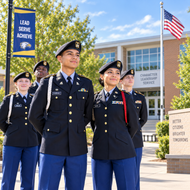
What Is JROTC? A Guide for Students and Potential Cadets
Sep 4th 2026
Choosing extracurricular activities can be challenging, especially if you're interested in leadership, teamwork, or military traditions but aren't sure what JROTC involves. Many students and parents also wonder whether joining requires military service.
Junior Reserve Officers' Training Corps (JROTC) is a leadership and citizenship program offered at participating middle and high schools across the United States. It introduces students to military customs and values while helping them develop leadership, teamwork, discipline, communication, and personal responsibility through classroom instruction, fitness, community service, and ceremonies. This guide explains what JROTC is, what students do, its benefits, and how it differs from ROTC.
What Is JROTC and What Does It Stand For?
The Junior Reserve Officers' Training Corps (JROTC) is a federally authorized program sponsored by the U.S. Armed Forces and offered at participating schools. Established under Title 10 of the United States Code, the program provides structured instruction in leadership, citizenship, character development, and personal responsibility.
JROTC stands for Junior Reserve Officers' Training Corps. It is designed primarily for students at the middle and high school levels and is different from the college-level Reserve Officers' Training Corps (ROTC). While cadets learn military customs, traditions, and discipline, the program focuses on education, leadership development, citizenship, and personal responsibility.
JROTC programs are offered through the Army, Air Force, Navy, Marine Corps, and Coast Guard at participating schools. Curriculum, uniforms, traditions, and activities can vary by branch and school.
What Is the Purpose of JROTC?
The purpose of JROTC is to help students develop leadership, citizenship, character, and personal responsibility. Although military customs and traditions are part of the program, JROTC is not solely focused on military knowledge or careers.
JROTC programs help cadets:
- Build leadership and decision-making skills
- Strengthen self-discipline and accountability
- Improve communication and teamwork
- Develop respect for others and their communities
- Practice citizenship through service and civic engagement
These skills can benefit students whether they pursue college, technical education, civilian careers, public service, or military service.
What Is the Mission of JROTC?
Each JROTC branch has its own program structure and curriculum. Army JROTC, for example, states its mission as “To motivate young people to be better citizens.
What Are the Core Values of JROTC?
The official mission of Army JROTC, established by the U.S. Army Cadet Command, is: "To motivate young people to be better citizens." This mission reflects the program's emphasis on character development rather than military recruitment. Lessons are designed to help students make responsible decisions, lead by example, and contribute positively to their schools and communities.
Other military branches share similar objectives by promoting leadership, citizenship, academic achievement, and ethical decision-making.
Core Values Students Learn
Throughout the program, cadets are encouraged to practice values that extend well beyond the classroom. These include:
- Integrity and ethical leadership
- Respect for others
- Responsibility and accountability
- Self-discipline
- Teamwork
- Service to the community
- Confidence under pressure
Rather than teaching these concepts through lectures alone, JROTC reinforces them through practical leadership opportunities, team activities, community projects, and daily participation.
What Do You Do in JROTC?
One of the biggest misconceptions about JROTC is that students spend all their time marching in uniform. In reality, cadets participate in a wide range of educational and extracurricular activities that help develop leadership, communication, and problem-solving skills. Activities vary by school and branch, so not every JROTC unit offers the same classes, teams, competitions, or extracurricular opportunities.
Leadership Training and Development
Leadership development is at the heart of every JROTC program. As cadets gain experience, they may serve in leadership positions responsible for planning events, mentoring younger cadets, coordinating activities, and leading teams.
What Do You Learn in JROTC Classes?
JROTC classes combine leadership education with practical life skills. Depending on the branch and school, instruction may include:
- Leadership theory
- Communication skills
- Financial literacy
- Goal setting
- Health and wellness
- U.S. history and civics
- Career exploration
- First aid and safety awareness
Physical Fitness Activities
Physical fitness is an important part of many JROTC programs, but the focus is on building healthy habits, teamwork, and personal improvement rather than meeting military fitness standards.
Activities vary by school and branch but may include cardiovascular exercise, strength training, obstacle courses, and team-building challenges.
Community Service Projects
Community service is a core component of JROTC because it reinforces the program's emphasis on citizenship. Cadets regularly volunteer at school functions, veterans' events, food drives, memorial ceremonies, charity fundraisers, and local community projects.
These experiences help students develop leadership while making a meaningful contribution to their communities.
Drill, Ceremonies, and Color Guard
Drill teaches cadets precision, discipline, teamwork, and attention to detail through coordinated marching movements and military commands. Many schools also have Color Guard teams that present the U.S. flag at school, community, and veteran ceremonies.
Some JROTC units compete in regional and national drill competitions where teams demonstrate synchronized marching, inspection readiness, and ceremonial skills.
Cadets participating in these activities often wear branch-specific uniforms and accessories that meet program standards. Uniform requirements vary by program, so cadets should follow the guidance provided by their JROTC instructor or unit.
JROTC Competitions and Extracurricular Activities
Many JROTC programs offer activities beyond the classroom, allowing cadets to apply leadership and teamwork in competitive settings. Depending on the school, students may participate in:
- Academic Bowl competitions
- Leadership Challenge events
- Raider Challenge teams
- STEM competitions
- Marksmanship programs (where authorized)
- Orienteering and navigation events
Participation varies by school, giving cadets opportunities to explore interests while developing practical skills in a structured environment.
JROTC vs. ROTC: What Is the Difference?
Although the names are similar, JROTC and ROTC serve different purposes and are intended for different age groups.
|
JROTC |
ROTC |
|
Offered in participating middle and high schools |
Offered at colleges and universities |
|
Focuses on leadership, citizenship, and character development |
Focuses on developing future commissioned officers |
|
No military service obligation simply for participating |
Service commitment may apply depending on scholarships or contracts |
|
Open to eligible secondary school students |
Open to eligible college students |
|
Emphasizes education and personal growth |
Combines military training with college education |
In simple terms, JROTC is a secondary-school leadership and citizenship program, while ROTC is a college-level program designed to develop future military officers.
What Are the Benefits of JROTC?
Students join JROTC for many reasons, and the benefits often extend well beyond high school.
Develop Leadership Skills
Cadets gain practical leadership experience by planning activities, organizing teams, mentoring younger students, and accepting increasing levels of responsibility throughout the program.
Improve Self-Confidence
Whether speaking in front of a group, leading a drill formation, or participating in competitions, JROTC encourages students to step outside their comfort zone and build confidence through experience.
Build Teamwork and Communication
Nearly every JROTC activity requires collaboration. Cadets learn how to communicate effectively, solve problems together, and support one another while working toward shared goals.
Learn Time Management and Responsibility
Balancing academics, leadership roles, community service, and extracurricular activities helps students strengthen organizational skills and personal accountability.
Strengthen College and Career Readiness
Participation in JROTC demonstrates long-term commitment, initiative, and involvement outside the classroom. Many colleges, scholarship committees, and employers value sustained extracurricular participation because it reflects reliability, time management, and a willingness to take on responsibility.
Students also gain exposure to career pathways in public service, aviation, engineering, healthcare, emergency services, and the military through branch-specific activities and guest speakers.
Who Can Join JROTC? Eligibility and Requirements
JROTC is designed to be accessible to students with a wide range of interests, not just those considering military careers.
Grade Levels
Most JROTC programs are available to students in grades 9 through 12, although some schools also offer middle school leadership programs depending on the district and branch.
Availability depends on whether a student's school hosts a JROTC unit.
Enrollment Requirements
Enrollment requirements vary by school and military branch, but students generally must:
- Attend a school that offers JROTC.
- Meet the school's academic and conduct expectations.
- Enroll in the JROTC course as part of their class schedule.
Schools may have additional local requirements, so students should speak with their guidance counselor or JROTC instructor for specific enrollment information.
Do You Have to Join the Military After JROTC?
No. Joining JROTC does not require students to enlist in the U.S. military after graduation.
This is one of the most common misconceptions about the program. According to the U.S. Army Cadet Command, the purpose of JROTC is to develop better citizens, and participation alone does not create a military service obligation.
Students are free to pursue college, trade schools, civilian careers, public service, or military service after graduation.
Common Misconceptions About JROTC
Several myths discourage students from exploring JROTC. Here's what prospective cadets should know:
|
Myth |
Reality |
|
JROTC is a military boot camp. |
It is an educational leadership program taught in schools. |
|
Joining JROTC means joining the military. |
Participation does not create a military service obligation. |
|
Only students pursuing military careers should join. |
Many cadets continue into college, business, healthcare, education, public service, and other civilian careers. |
|
Every class is spent marching. |
Leadership education, citizenship, academics, fitness, and community service make up much of the curriculum. |
|
JROTC is only for students who want military careers. |
Students can use JROTC to develop leadership, teamwork, citizenship, and other skills for military or civilian career paths. |
Is JROTC a Good Fit for You?
JROTC may be a good fit if you enjoy structured activities, teamwork, leadership opportunities, community service, or school events such as ceremonies and competitions.
It can also be a good option if you want to build confidence, discipline, communication skills, and experience taking responsibility for a team or activity.
Before joining, consider what your local program offers because activities, class requirements, uniforms, and extracurricular opportunities can vary by school and branch.
Conclusion
JROTC gives students practical opportunities to develop leadership, teamwork, communication, discipline, and responsibility while becoming more involved in their school and community. Although the program includes military customs and traditions, participation does not require a commitment to military service.
For students considering JROTC, the best next step is to learn what their local program offers and decide whether its activities and expectations match their interests and goals. If your program requires specific uniform items, follow your unit's requirements when choosing approved cadet uniforms and accessories.
Frequently Asked Questions
Is JROTC available at every middle or high school?
No. JROTC is offered only at participating schools, so availability depends on the school and local program. Students should check with their school to see whether a JROTC unit is available.
Can you join JROTC if you do not want a military career?
Yes. JROTC is not limited to students who plan to join the military. The program focuses on leadership, citizenship, character development, teamwork, and personal responsibility, making it relevant to students with a wide range of career goals.
Can you leave JROTC after joining?
Whether a student can leave JROTC and when they can do so depends on the school's enrollment policies and program requirements. Students should check with their school or JROTC instructor for specific rules.
Do JROTC programs differ between military branches?
Yes. JROTC programs can differ by military branch and school. Curriculum, uniforms, traditions, activities, teams, and competitions may vary, even though programs share an emphasis on leadership, citizenship, and personal development.
Does JROTC prepare students for ROTC after high school?
JROTC can help students develop leadership, discipline, teamwork, and communication skills that may be useful in college ROTC. However, JROTC is not required to join ROTC, and participating in JROTC does not create a military service obligation.