 Shop Military & Cadets
 Shop First responders
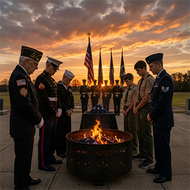
Flag Retirement Ceremony: The Complete Guide to Honoring Old Glory With Your Unit
Jun 3rd 2026
A worn American flag carries history with it. It may have flown over a school, a VFW post, a Scout camp, or a family home during moments both ordinary and unforgettable.
For many veterans, Scouts, cadets, and families, a flag retirement ceremony is not simply protocol. It is a final act of gratitude toward a symbol that has served with honor.
Many unit leaders understand that a flag retirement ceremony should be conducted with dignity, but they are often unsure how to organize one correctly. The U.S. Flag Code states that a flag no longer fit for display should be destroyed “in a dignified way, preferably by burning.” A well-planned ceremony honors both the symbol and the people who served under it.
This guide explains how to conduct a proper flag retirement ceremony with your unit, including ceremony procedures, leadership tips, safety considerations, and a Scout-ready flag retirement ceremony script your group can use immediately.
What Is a Flag Retirement Ceremony and Why Does It Matter?
A flag retirement ceremony is the dignified disposal of an American flag that is no longer suitable for display. This usually applies to flags that are:
- Torn or frayed
- Severely faded
- Stained or badly soiled
- Damaged beyond repair
Under 4 U.S.C. § 8(k), the U.S. Flag Code states that an unserviceable flag should be destroyed respectfully, preferably by burning. A flag retirement ceremony ensures that the process is carried out with solemnity rather than being treated as ordinary trash disposal.
It is important to remember that the United States flag represents far more than cloth and stitching. It symbolizes the nation’s history, sacrifice, and shared identity. That is why a flag retirement ceremony is treated as a final tribute.
Burning is the traditional method, but some organizations also use burial or certified flag recycling programs, especially for synthetic flags that may release harmful fumes when burned.
Who Can Conduct a Flag Retirement Ceremony?
One common misconception about the flag disposal ceremony is that only military organizations can retire a flag. In reality, the Flag Code does not restrict who may conduct a flag disposal ceremony, provided it is done respectfully.
Groups that commonly organize flag retirement ceremonies include:
- VFW and American Legion posts
- JROTC and ROTC units
- Scouts BSA and Girl Scouts troops
- Civil Air Patrol squadrons
- Fire and police departments
- Military honor guards
- Schools and civic organizations
- Private families retiring a veteran’s flag
Many public ceremonies take place around Flag Day on June 14, though ceremonies may be conducted any time of year.
You do not need government authorization to retire a flag. However, your area may require a local burn permit or restrict open flames during dry conditions.
How to Conduct a Flag Retirement Ceremony: Step-by-Step
Step 1: Inspect the Flag
Before learning how to retire an American flag, determine whether the flag is truly unserviceable. Some flags can be cleaned or repaired instead of destroyed.
A flag should generally be retired if it is badly faded, torn, or no longer presents a respectful appearance.
Step 2: Choose a Safe Location
Select an outdoor area away from buildings, dry brush, and heavy public traffic. The ideal fire should burn steadily rather than produce excessive smoke or sparks.
Many organizations hold ceremonies near sunset to reinforce the solemn nature of the event.
Step 3: Gather Materials
Prepare the following before participants arrive:
- A controlled ceremonial fire
- Fire extinguisher or water source
- Protective gloves
- Folding table
- Replacement service flag for posting
- Optional bugler for Taps
- Optional color guard
Only one ceremonial flag should typically be used during the formal tribute. Additional collected flags may be respectfully incinerated afterward.
Step 4: Open the Ceremony
The officer in charge calls the group to attention.
Some units include:
- Invocation or moment of silence
- Opening remarks
- Pledge of Allegiance
- Presentation of colors
According to the Flag Code, those reciting the Pledge should stand at attention, facing the flag with the right hand over the heart. Uniformed personnel render the military salute.
Step 5: Prepare the Flag for Retirement
The flag is unfolded carefully and inspected aloud.
Some organizations ceremonially cut the stripes before burning, while others believe the flag should remain intact. Units should decide this beforehand to avoid confusion during the ceremony.
A common tradition is separating the red-and-white stripes while leaving the blue union field untouched to symbolize the enduring unity of the states.
Step 6: Commit the Flag to the Fire
The officer in charge may read:
“This flag has served its nation faithfully. It is no longer fit to symbolize our country and is now retired with honor and dignity.”
Participants then place portions of the flag onto the fire respectfully and in silence.
Step 7: Render Honors
As the flag burns:
- The group salutes
- Taps may be played
- Silence is observed
- Optional ceremonial rifle honors may be rendered if authorized
The atmosphere should remain disciplined and respectful throughout.
Step 8: Close the Ceremony
After the flag is fully consumed:
- Ashes are buried or collected respectfully
- The fire is safely extinguished
- Closing remarks are delivered
Many units dismiss participants silently to preserve the solemn tone. Knowing how to retire an American flag with honor during a flag retirement ceremony reflects respect for our nation, our freedom, and our values.
Scout Flag Retirement Ceremony Script
This short flag retirement ceremony script is adapted for Scouts BSA, Cub Scouts, and Girl Scouts conducting a small troop ceremony.
Roles: Scoutmaster (SM), Senior Patrol Leader (SPL), Color Guard, Bugler (optional), Troop.
SPL: “Troop, attention. Color guard, advance the flag.”
SM: “We gather today to retire this American flag with dignity and respect. This flag has served faithfully as a symbol of our nation, its people, and the freedom we cherish.”
SM: “The United States Flag Code instructs that a flag no longer fit for display should be retired in a dignified manner. Today, we honor that duty.”
(Scoutmaster inspects the flag.)
SM: “This flag has become worn through honorable service and is no longer a fitting emblem for display.”
SM: “We now separate the stripes, but we do not divide the union. The field of stars remains whole, representing the enduring unity of our nation.”
(If the troop chooses to cut the flag, the stripes are separated respectfully.)
SPL: “Scouts, forward.”
(Each Scout places one stripe onto the fire in silence.)
SPL: (places the union field last) “May this flag be retired with the honor it has earned.”
SM: “Troop, present arms.”
(The troop salutes as Taps is played or a moment of silence is observed.)
SM: “Order arms.”
SM: “Please join me in the Pledge of Allegiance.”
SM: “This ceremony is complete. May we always remember the principles this flag represents.”
SPL: “Troop, dismissed.”
(The fire remains attended until the flag is fully consumed. The ashes are later buried respectfully.)
Tips for Ceremony Leaders
Even well-organized units benefit from preparation.
- Rehearse the ceremony at least once beforehand
- Check local burn restrictions several days in advance
- Keep a fire extinguisher within reach at all times
- Assign one leader to monitor fire safety only
- Decide beforehand whether your unit will cut the flag
- Keep photographers discreet and avoid interruptions
- Plan for wind direction and weather conditions
- Consider recycling synthetic flags instead of burning them
- Invite families and community members when appropriate
- Debrief younger Scouts or cadets afterward
Many participants experience a deeper emotional response during the flag disposal ceremony than expected. That reaction reflects the weight of the ceremony and the respect it represents.
Equipping Your Unit for the Ceremony
A successful flag retirement ceremony depends on three things: understanding the proper protocol, preparing the ceremony carefully, and having a replacement flag ready to fly afterward.
For Scouts, cadets, honor guards, and veterans organizations, these ceremonies become lasting lessons in respect, discipline, and service. They strengthen unit traditions while honoring a symbol that represents generations of Americans.
After retiring an old flag, your unit should have a new one ready to fly with the same pride and dignity. Explore Glendale Parade Store’s American flags collection for high-quality U.S. flags trusted by schools, Scout troops, honor guards, veterans organizations, and community ceremonies.
Units preparing for upcoming patriotic events can also shop America’s 250th Anniversary flags designed to commemorate the nation’s Semiquincentennial celebration.
FAQs
Is it illegal to burn an American flag?
No. The US Flag Code recognizes dignified burning as the preferred method for retiring an unserviceable American flag. A flag retirement ceremony conducted respectfully is considered a lawful and honorable tradition practiced by veterans organizations, Scout troops, and military groups across the country.
Can you retire a flag indoors?
Most flag retirement ceremonies are held outdoors because of fire safety requirements and the ceremonial atmosphere they create. If outdoor burning is not possible, some organizations use approved incinerators or partner with local veterans groups that offer retirement services. Synthetic flags, especially, should be handled carefully due to fumes.
Should you cut the flag before burning it?
There is no official federal rule requiring a flag to be cut before retirement. Some units separate the stripes while leaving the union field intact to symbolize that the nation remains united. Others believe the flag should remain whole throughout the flag disposal ceremony. Your unit should decide its approach before the event begins.
What do you do with the ashes after a flag retirement ceremony?
Once the fire has completely cooled, the ashes should be collected and buried respectfully. Many units bury them near a memorial site, flagpole, or designated ceremonial area. The ashes should never be discarded casually.
Where can your unit drop off old flags for retirement if you cannot conduct your own ceremony?
Many local VFW posts, American Legion halls, Scout councils, and fire departments accept worn American flags for retirement. Some communities also maintain permanent flag retirement drop boxes throughout the year. Contact local veterans organizations in advance to confirm collection schedules and ceremony dates.
How to retire an American flag?
The American flag is retired when it becomes faded, torn, or no longer fit for display. The U.S. Flag Code recommends retiring it in a dignified manner, preferably through a formal flag retirement ceremony involving respectful burning and proper disposal of the ashes. If your unit cannot conduct a ceremony, many VFW posts, American Legion halls, and Scout organizations accept flags for retirement.